Belo ciganče

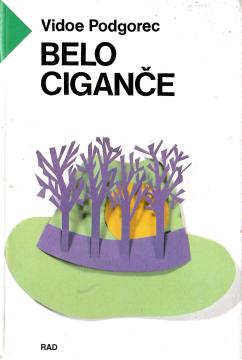
Belo ciganče

Vidoe Podgorec

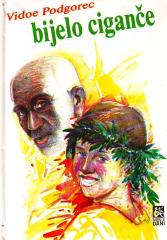
Die Geschichte eines Jungen namens Tarun, der seine Eltern im Krieg verlor, nachdem sie von den Nazis getötet worden waren. Er wurde am Straßenrand ausgesetzt, wo ihn wandernde Roma fanden und ihn adoptierten. Wegen seiner hellen Haut nannten sie ihn „Wei

Tarun wächst in einem Roma-Zelt auf und akzeptiert deren Lebensweise, Bräuche und Werte. Sein Adoptivvater, Papa Mulon, war ein Mann mit edlem Herzen und wurde wie ein Vater für ihn. Er wird jedoch nicht von allen Mitgliedern der Gemeinschaft akzeptiert; Henza, Mulons Frau, begegnet ihm mit Feindseligkeit und empfindet ihn als Belastung.

Trotz aller Herausforderungen entwickelt Tarun eine starke Bindung zu dem Pferd Bresko, das er nach dem Tod seiner Stute aufgezogen hat. Ihre Freundschaft symbolisiert Taruns Fähigkeit, Liebe und Zugehörigkeit in einer Welt zu finden, die ihn oft ablehnt.

Der Roman behandelt Themen wie Identität, Zugehörigkeit, Toleranz und Erwachsenwerden. Anhand von Taruns Geschichte zeigt der Autor, wie Liebe und Akzeptanz Vorurteile und Feindseligkeit überwinden können.

Prevod
Risto Vasilevski
Urednik
Dragan Lakićević
Naslovnica
Jelena Grujičić
Dimenzije
21 x 13,5 cm
Broj strana
382
Izdavač
Rad, Beograd, 1988.
 
Latinica. Tvrde korice.
Jezik: Srpski.

Nema primeraka u ponudi

Poslednji primerak je nedavno prodat.
 

Zanima Vas i neka druga knjiga? Možete pretražiti našu ponudu pomoću pretrage ili prelistati knjige po kategorijama.

Možda će Vas zanimati i ovi naslovi

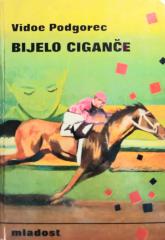
Bijelo ciganče

Bijelo ciganče

Vidoe Podgorec

Die Geschichte eines Jungen namens Tarun, der seine Eltern im Krieg verlor, nachdem sie von den Nazis getötet worden waren. Er wurde am Straßenrand ausgesetzt, wo ihn wandernde Roma fanden und ihn adoptierten. Wegen seiner hellen Haut nannten sie ihn „Wei

Mladost, 1987.
Hrvatski. Latinica. Broširano.
3,56 - 3,74
Bijelo ciganče

Bijelo ciganče

Vidoe Podgorec

The story of a boy named Tarun, who lost his parents during the war after they were killed by the Nazis. He was left by the side of the road, where he was found by wandering Roma who decided to adopt him. Because of his fair skin, they called him "White G

Svjetlost, 1989.
Hrvatski. Latinica. Tvrde korice.
4,36
Pariški maraton : Knjiga pisanja (Pariz21. i 22. oktobar 2023)

Pariški maraton : Knjiga pisanja (Pariz21. i 22. oktobar 2023)

At the end of the eighties, Damir Uzunović traveled to Paris and stayed there for less than a year. He was twenty years old at the time, and that exile episode would be formative for the literature he would later write.

Buybook, 2024.
Hrvatski. Latinica. Tvrde korice.
12,22
Proces

Proces

Franz Kafka

Kafka wrote The Process between 1914 and 1915, published posthumously in 1925. The novel is unfinished but with an added final chapter by Max Brod. Edition with a foreword by B. Živojinović and an afterword by Walter Killi.

BIGZ, 1990.
Srpski. Latinica. Broširano.
4,26
Deobe 1-3

Deobe 1-3

Dobrica Ćosić

This work, awarded the NIN Prize for that year, is considered one of the most significant in Serbian literature after World War II.

Prosveta, 1961.
Srpski. Ćirilica. Tvrde korice s omotom.
Knjiga se sastoji od tri toma
11,42
Rudnik čvaraka

Rudnik čvaraka

Tomislav Šovagović

The debut work of Croatian writer Tomislav Šovagović, awarded the Josip and Ivan Kozarac Award in 2012, is a dedication to Slavonia – the region of his childhood that the author, born in Dalmatia, observes with foreign but tender eyes.

Mozaik knjiga, 20112.
Hrvatski. Latinica. Broširano.
11,56