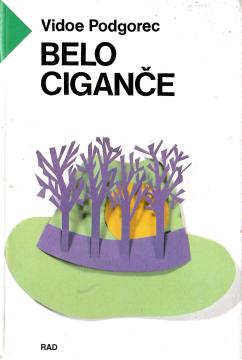
Belo ciganče

Belo ciganče

Vidoe Podgorec

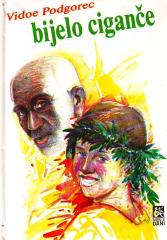
The story of a boy named Tarun, who lost his parents during the war after they were killed by the Nazis. He was left by the side of the road, where he was found by wandering Roma who decided to adopt him. Because of his fair skin, they called him "White G

Tarun grows up in a Roma tent, accepting their way of life, customs and values. His adoptive father, Papa Mulon, was a man of a noble heart and became like a father to him. However, he is not accepted by all members of the community; Henza, Mulon's wife, shows hostility towards him, considering him a burden.

Despite the challenges, Tarun develops a strong bond with the horse Bresko, whom he raised after the death of his mare. Their friendship symbolizes Tarun's ability to find love and belonging in a world that often rejects him.

The novel explores themes of identity, belonging, tolerance and growing up. Through Tarun's story, the author shows how love and acceptance can overcome prejudice and hostility.

Translation
Risto Vasilevski
Editor
Dragan Lakićević
Graphics design
Jelena Grujičić
Dimensions
21 x 13.5 cm
Pages
382
Publisher
Rad, Beograd, 1988.
 
Latin alphabet. Hardcover.
Language: Serbian.

No copies available

The last copy was sold recently.
 

Are you interested in another book? You can search the offer using our search engine or browse books by category.

You may also be interested in these titles

Bijelo ciganče

Bijelo ciganče

Vidoe Podgorec

The story of a boy named Tarun, who lost his parents during the war after they were killed by the Nazis. He was left by the side of the road, where he was found by wandering Roma who decided to adopt him. Because of his fair skin, they called him "White G

Mladost, 1987.
Croatian. Latin alphabet. Paperback.
3.56 - 3.74
Bijelo ciganče

Bijelo ciganče

Vidoe Podgorec

The story of a boy named Tarun, who lost his parents during the war after they were killed by the Nazis. He was left by the side of the road, where he was found by wandering Roma who decided to adopt him. Because of his fair skin, they called him "White G

Svjetlost, 1989.
Croatian. Latin alphabet. Hardcover.
4.36
Obećana zemlja 1-2

Obećana zemlja 1-2

Wladyslaw St. Reymont

The novel The Promised Land, published in 1899, is one of the most significant works by Polish Nobel Prize winner Władysław Reymont. Set in the industrial city of Łódź at the end of the 19th century, the novel depicts rapid industrialization and its conse

Naklada zaklade tiskare Narodnih novina, 1932.
Croatian. Latin alphabet. Hardcover.
The book consists of two volumes
13.24
Ispovijed isuvišna čovjeka

Ispovijed isuvišna čovjeka

Tomislav Marijan Bilosnić
Globus, 1985.
Croatian. Latin alphabet. Hardcover with dust jacket.
9.286.96 - 9.28
Djela #17: U svijetu

Djela #17: U svijetu

Maksim Gorki

"In the World" is the second part of Maxim Gorky's autobiographical trilogy, published in 1916. The trilogy includes the works "Childhood", "In the World", and "My Universities", providing insight into the author's formative years.

Kultura, 1949.
Croatian. Latin alphabet. Hardcover.
3.94 - 3.99
Čuvaj se senjske ruke

Čuvaj se senjske ruke

August Šenoa
Školska knjiga, 1983.
Croatian. Latin alphabet. Paperback.
1.74 - 2.98