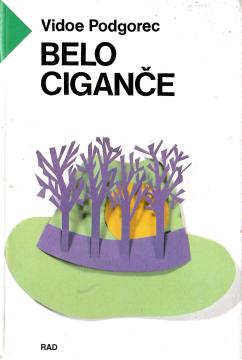
Belo ciganče

Belo ciganče

Vidoe Podgorec

The story of a boy named Tarun, who lost his parents during the war after they were killed by the Nazis. He was left by the side of the road, where he was found by wandering Roma who decided to adopt him. Because of his fair skin, they called him "White G

Tarun grows up in a Roma tent, accepting their way of life, customs and values. His adoptive father, Papa Mulon, was a man of a noble heart and became like a father to him. However, he is not accepted by all members of the community; Henza, Mulon's wife, shows hostility towards him, considering him a burden.

Despite the challenges, Tarun develops a strong bond with the horse Bresko, whom he raised after the death of his mare. Their friendship symbolizes Tarun's ability to find love and belonging in a world that often rejects him.

The novel explores themes of identity, belonging, tolerance and growing up. Through Tarun's story, the author shows how love and acceptance can overcome prejudice and hostility.

Übersetzung
Risto Vasilevski
Editor
Dragan Lakićević
Titelseite
Jelena Grujičić
Maße
21 x 13,5 cm
Seitenzahl
382
Verlag
Rad, Beograd, 1988.
 
Latein Schrift. Hardcover.
Sprache: Serbisch.

Im Angebot sind keine Exemplare vorhanden

Das letzte Exemplar wurde kürzlich verkauft.
 

Interessieren Sie sich für ein anderes Buch? Sie können das Angebot über unsere Suchmaschine suchen und finden oder Bücher nach Kategorien durchsuchen.

Diese Titel könnten Sie auch interessieren

Bijelo ciganče

Bijelo ciganče

Vidoe Podgorec

The story of a boy named Tarun, who lost his parents during the war after they were killed by the Nazis. He was left by the side of the road, where he was found by wandering Roma who decided to adopt him. Because of his fair skin, they called him "White G

Mladost, 1987.
Kroatisch. Latein Schrift. Taschenbuch.
3,56 - 3,74
Bijelo ciganče

Bijelo ciganče

Vidoe Podgorec

Priča o dečaku po imenu Tarun, koji je izgubio roditelje tokom rata nakon što su ih ubili nacisti. Ostavljen je pored puta, gde su ga pronašli lutajući Romi koji su odlučili da ga usvoje. Zbog svetle kože, zvali su ga „Belo Ciganče“.

Svjetlost, 1989.
Kroatisch. Latein Schrift. Hardcover.
4,36
Posljednji Stipančići

Posljednji Stipančići

Vjenceslav Novak

Radnja romana Posljednji Stipančići smještena je u prvo desetljeće 19. stoljeća. Usmjerena je na propadanje jedne patricijske obitelji te seže daleko u prošlost, u zadnja dva naraštaja ove obitelji.

Branko Đonović, 1963.
Serbisch. Latein Schrift. Hardcover.
4,88
Kira Georgijevna

Kira Georgijevna

Viktor Nekrasov

Novela je prvi put objavljena 1961. godine u časopisu Novi mir i izazvala je gnev kritičara, ističući da je reč samo o "uskim, intimnim iskustvima junakinje".

Svjetlost, 1963.
Kroatisch. Latein Schrift. Taschenbuch.
4,38
Drama u lovu

Drama u lovu

Anton Pavlovič Čehov

Među mnogobrojnim delima Čehova, koja su prevedena i kod nas i u svetu, njegov roman Drama u lovu predstavlja manje poznato delo ovog velikog pisca.

Svjetlost, 1963.
Kroatisch. Latein Schrift. Taschenbuch.
3,96 - 3,98
Bakonja fra Brne

Bakonja fra Brne

Simo Matavulj

Bakonja fra Brne je roman koji je 1892. objavio Simo Matavulj. Radnja je smještena u Dalmatinsku zagoru oko 1870. godine, a naslovni junak mladić koji, slijedeći porodičnu tradiciju, postaje jedan od franjevačkih redovnika u samostanu Visovac.

Branko Đonović, 1963.
Kroatisch. Latein Schrift. Hardcover.
4,28