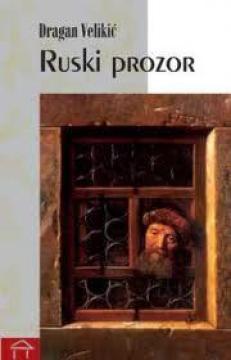
Ruski prozor

Ruski prozor

Dragan Velikić

In the novel Russian Window, Dragan Velikić creates a three-part "omnibus novel" about exile, questioning identity, and the transience of life. The first chapter is narrated by Danijel, an aging conductor who introspectively questions his own destiny; the second forms the core of the narrative, following Rudi Stupar, a Vojvodina native and unsuspecting actor, who flees Belgrade in the chaos of the 1990s and passes through Budapest, Hamburg, and other European centers. The final, third part consists of a series of short confessions by other characters, who comment on Rudi's life and leave him in a different light.

Through a complex narrative structure - fragmented memories and asymmetrical narrative units - Velikić builds an atmosphere of melancholic reflection, where Russian Window represents a "photograph": a small account of life, a cross-section of inner aspirations and memories. The style is refined and precise, often poetic, so the prose balances between intellectual essay and intimate confession.

The themes touch on exile, the search for a spiritual home, and the establishment of a balance between personal destiny and the broader historical dynamics. Throughout his wandering existence, Rudi carries an introspective burden of nostalgia and failure, at the same time imbued with humor and self-irony as a resistance against his petty-bourgeois fate.

Urednik
Predrag Marković
Naslovnica
Dušan Šević
Dimenzije
20,5 x 13,5 cm
Broj strana
303
Izdavač
Stubovi kulture, Beograd, 2008.
 
Latinica. Broširano.
Jezik: Srpski.
ISBN
978-8-67979-221-1

Jedan primerak je u ponudi

Stanje:Korišćeno, u odličnom stanju
Dodato u korpu!
 

Zanima Vas i neka druga knjiga? Možete pretražiti našu ponudu pomoću pretrage ili prelistati knjige po kategorijama.

Možda će Vas zanimati i ovi naslovi

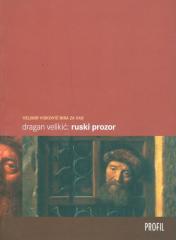
Ruski prozor

Ruski prozor

Dragan Velikić

Perhaps the greatest virtue of Velikić's writing, which culminated in this novel, is his extraordinarily refined feeling for life's details, which he depicts and evokes with an almost shamanic power of materialization.

Profil International, 2008.
Hrvatski. Latinica. Broširano.
6,98
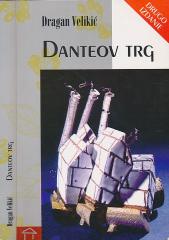
Danteov trg

Danteov trg

Dragan Velikić

As in Velikić's previous novels, the heroes weave analogous and often intertwined destinies of frustrated Central European citizens and intellectuals, the topography is very diverse, but also recognizable.

Stubovi kulture, 1998.
Srpski. Latinica. Broširano.
6,72
Tri mušketira 1-2

Tri mušketira 1-2

Alexandre Dumas

Dumas' version of the story depicts the adventures of d'Artagnan and his friends from 1625 to 1628.

Epoha, 1966.
Hrvatski. Latinica. Tvrde korice s omotom.
Knjiga se sastoji od dva toma
9,48
Dok ležah na samrti

Dok ležah na samrti

William Faulkner

Faulkner's 1930 novel, a classic example of modernist literature. It is often compared to Joyce's "Ulysses" for its innovative structure, but is more accessible due to its focus on family.

Rad, 1985.
Hrvatski. Latinica. Broširano.
3,26
Andrićeva lestvica užasa

Andrićeva lestvica užasa

Svetislav Basara

A Serbian writer known for his satirical novels, Andrić's Ladder of Horrors dissects the Balkan mentality through a parable of Yugo-nostalgia and national myths. The title alludes to Ivo Andrić as a litmus test for criticism – Balkans claim him or reject

24 sata, 2021.
Srpski. Latinica. Broširano.
11,56
Zagrepčanka

Zagrepčanka

Branislav Glumac

Branislav Glumac published a novel without periods or commas in 1974, as the relentless stream of thought of a young rebel. Published in socialist Yugoslavia, the work caused a scandal with its openness and became a classic about generational rebellion.

IROS, 1986.
Hrvatski. Latinica. Tvrde korice.
8,24