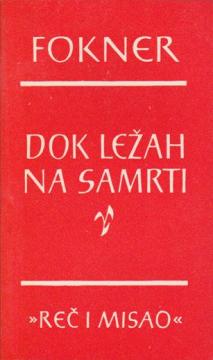
Dok ležah na samrti
Folknerov roman iz 1930. godine, klasičan primer modernističke književnosti. Često se poredi sa Džojsovim „Uliksom“ zbog svoje inovativne strukture, ali je pristupačniji zbog fokusa na porodicu.
Smeštena u ruralnom Misisipiju tokom Velike depresije, priča prati porodicu Bandren na njihovom apsurdno tragičnom putovanju kako bi ispunili Adi, poslednju želju svoje majke: sahranu na obalama reke u Džefersonu, 64 kilometra od njihove farme. Roman se sastoji od 59 poglavlja, uglavnom kratkih monologa u stilu toka svesti, koji otkrivaju unutrašnje svetove likova. Fokner koristi više od 15 glasova, svaki jedinstven po jeziku, ritmu i percepciji, stvarajući mozaik psihe pun kontrasta i ironije.
Adi Bandren, majka četvoro dece na samrti, je centralna figura, iako se njen glas pojavljuje samo u jednom retrospektivnom poglavlju. Njena smrt pokreće zaplet: ona traži sahranu u Džefersonu, daleko od muža i dece koji su je, po njenim rečima, „preplavili“ svojim postojanjem. Ans Bandren, njen muž, tvrdoglav, pohlepan i pasivan, vozi karavan. Opisan kao čovek sa „dva drveta umesto nogu“, Ans putovanje vidi kao priliku za nove zube i drugu ženu, prodajući porodične stvari bez griže savesti.
Priča se odvija tokom devet dana, od Adijeve smrti do sahrane. Karavan - Ans, njegovi sinovi i Djui Del - vuče kovčeg na starim kolima preko poplavljenih puteva, močvara i brda. Folknerov opis mesta radnje je gotovo biblijski: reka poplavljena kišom simbolizuje haos postojanja, a kovčeg postaje metafora za propadanje tela i duše. Putovanje nije samo fizičko; ono otkriva porodične tajne: Adijevu nevernost, Ansovu lenjost, traumu iz detinjstva. Džeferson, odredište, donosi ironičan kraj: sahrana se odvija, ali Ans brzo pronalazi novu ženu i zube, ostavljajući porodicu još više podeljenom.
Roman je kratak, ali gust, sa više slojeva značenja. Idealan za čitaoce koji vole psihološku dubinu, grotesku i američki modernizam. Ako tražite roman koji će vas naterati da razmišljate o smrti bez patetike, ovo je pravi izbor. Sam Folkner je rekao: „Stvorio sam svet toliko stvaran da ga niko ne može ignorisati.“
Angeboten wird ein Exemplar