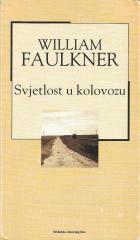
Dok ležah na samrti
Faulkner's 1930 novel, a classic example of modernist literature. It is often compared to Joyce's "Ulysses" for its innovative structure, but is more accessible due to its focus on family.
Set in rural Mississippi during the Great Depression, the story follows the Bundren family on their absurdly tragic journey to fulfill Addie, their mother's last wish: a burial on the banks of the river in Jefferson, 40 miles from their farm. The novel consists of 59 chapters, mostly short monologues in a stream-of-consciousness style, which reveal the inner worlds of the characters. Faulkner uses more than 15 voices, each unique in language, rhythm, and perception, creating a mosaic of psyches full of contrast and irony.
Addie Bundren, a dying mother of four, is the central figure, although her voice appears only in one retrospective chapter. Her death sets the plot in motion: she seeks burial in Jefferson, far from her husband and children who, in her words, "overwhelmed" her with their existence. Anse Bundren, her husband, stubborn, greedy, and passive, drives a caravan. Described as a man with "two trees for legs," Anse sees the journey as an opportunity for new teeth and a second wife, selling family belongings without a twinge of conscience.
The story unfolds over nine days, from Addie’s death to the funeral. The caravan—Anse, his sons, and Dewey Dell—pulls the coffin on an old wagon over flooded roads, swamps, and hills. Faulkner’s description of the setting is almost biblical: the river flooded by rain symbolizes the chaos of existence, and the coffin becomes a metaphor for the decay of body and soul. The journey is not just physical; it reveals family secrets: Addie’s infidelity, Anse’s laziness, childhood trauma. Jefferson, the destination, brings an ironic ending: the burial takes place, but Anse quickly finds a new wife and teeth, leaving the family even more divided.
The novel is short but dense, with multiple layers of meaning. Ideal for readers who love psychological depth, the grotesque, and American modernism. If you’re looking for a novel that will make you think about death without pathos, this is the choice. Faulkner himself said, “I have created a world so real that no one can ignore it.”
Nema primjeraka u ponudi
Poslednji primjerak je nedavno prodan.