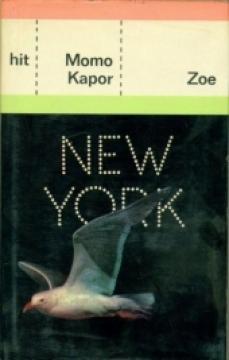
Zoe

Zoe

Momo Kapor

The novel "Zoe" (1978), one of Momo Kapor's most popular works, follows Arsen Lero, a 39-year-old art historian from the fictional Republic of Kosiliya – a small island under an authoritarian regime.

Ler, a married father of a young daughter, Maja, and curator of a gallery in the city of Mimosa, receives an assignment from the Minister of Culture to purchase the portrait "Girl with a Doll" by the painter Valdemar Udini, a key piece of national heritage, at an auction in New York. He travels by plane via Athens to Megapolis, experiencing the shock of the contrast between provincial life and the chaotic city.

At the auction, with the help of the consulate, he buys the painting for $1,200, but is confronted by Princess Zoe Kudelin, an exiled member of a deposed royal dynasty, born in 1938 - the same day as Ler. Zoe, a cosmopolitan woman in exile, lives in Greenwich Village, dealing in promotions and fashion to survive. She claims that the portrait is her boyish self, painted by Udini. The two begin a passionate romance: walks in Central Park, dinners at the "Russian Tea Room", visits to museums such as the Guggenheim, and exploring the Kosilian community in the Bronx, at the "Mimosa" tavern. Ler moves in with her, changing his habits, while facing offers from rich collectors and traces of the past.

Zoe bears the burden of exile: the death of her father, King Nicholas IV, at the Savoy Hotel, and only has a button from his shirt as an inheritance. The novel explores the themes of totalitarian repression (censorship, paranoia, prohibition of escape), exile and nostalgia for a lost home, the identity of a small nation in world chaos (Kozilia as a "non-existent" island), art as resistance and a bridge to the roots, and love between the past and the present - a modern fairy tale about a shepherd and a princess. Through satirical descriptions, introspective monologues and vivid urban scenes, Kapor shows the contrast of tradition and modernity, the poverty of emigrants and false splendor, eroticism and loneliness, reminding us that exile is not only a geographical, but also a mental phenomenon.

Editor
Zlatko Crnković
Titelseite
Alfred Pal
Maße
20 x 12 cm
Seitenzahl
167
Verlag
Znanje, Zagreb, 1978.
 
Latein Schrift. Fester Einband mit Schutzumschlag.
Sprache: Kroatisch.

Angeboten wird ein Exemplar

Zustand:Gebraucht, in ausgezeichnetem Zustand
Zum Warenkorb hinzugefügt!
 

Interessieren Sie sich für ein anderes Buch? Sie können das Angebot über unsere Suchmaschine suchen und finden oder Bücher nach Kategorien durchsuchen.

Diese Titel könnten Sie auch interessieren

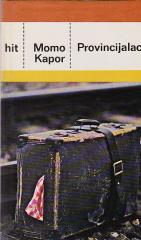
Provincijalac

Provincijalac

Momo Kapor

As much as Foliranti is a story about Kapor's student days in Belgrade in the late fifties, Provincial is a book that evokes memories of his childhood in Sarajevo, where the author spent the first years of his life.

Znanje, 1978.
Serbisch. Latein Schrift. Fester Einband mit Schutzumschlag.
6,42
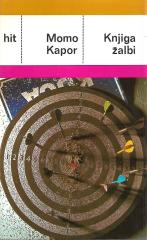
Knjiga žalbi

Knjiga žalbi

Momo Kapor

The book of complaints was published for the first time back in 1984 and immediately attracted great attention from the literary audience and critics.

Znanje, 1984.
Kroatisch. Latein Schrift. Fester Einband mit Schutzumschlag.
9,54 - 9,56
Skitam i pričam

Skitam i pričam

Momo Kapor

The book I'm wandering and talking was written for several years, and parts of it were published from Sunday to Sunday on the pages of the magazine Duga. Second, significantly expanded edition.

Znanje, 1982.
Serbisch. Latein Schrift. Fester Einband mit Schutzumschlag.
12,429,32
Hansenova djeca

Hansenova djeca

Ognjen Spahić

Hansen's Children is a thrilling and terrifying story about the fate of prisoners in Europe's last leper colony, in southern Romania; forgotten during the fall of a totalitarian regime.

Durieux, 2004.
Kroatisch. Latein Schrift. Taschenbuch.
8,32
Moj Argentinski Tango - ispovest Mornara Pešića

Moj Argentinski Tango - ispovest Mornara Pešića

Predrag Aleksijević

The book is an authentic, poignant, and humorous confession of the Belgrade sailor and bohemian Milorad Mornar Pešić (1934–2018), which Predrag Aleksijević wrote down and shaped into a confessional novel.

NIRO Exportpress, 1984.
Serbisch. Latein Schrift. Taschenbuch mit Einband.
5,26
Oče, ako jesi

Oče, ako jesi

Julijana Adamović

Father If You Are by Julijana Adamović is a powerful family saga about the search for a father, identity, and truth, written through the destinies of women and men in the whirlwind of history, in the heart of Pannonia, where the earth gives birth and buri

Fraktura, 2023.
Kroatisch. Latein Schrift. Fester Einband mit Schutzumschlag.
17,42