Ružičasto raspeće II: Plexus

Ružičasto raspeće II: Plexus

Henry Miller

Henry Miller's "Plexus" is part of the "The Rosy Crucifixion" trilogy, in which, with less intensity than in his most famous works published in the 1930s in Paris, his rebellion against the stubborn and hypocritical America is sublimated.

Miller's novels were banned in America for nearly thirty years, giving him an "underground" reputation until the US Supreme Court in 1964 overturned the State Court's obscenity charges. It was these works in American literature that began the opening towards sexual themes, freeing them from legal and social restrictions.

Henry Miller (New York 1891 - Pacific Palisades, California 1980) published several essays and short stories in American magazines by the age of thirty. After a series of different jobs in New York, in 1930 he went to Paris, where he lived in poverty for a year. Then he gets a job as a proofreader in the Paris edition of the daily "The Chicago Tribune", thanks to his friend Alfred Perles, under whose name he also publishes several articles. He started writing seriously at the age of almost forty. His novels, especially Tropic of Cancer (1934), caused a lot of controversy in America, and were even banned, so the novels "Black spring" (1936) and "Tropy of Capricorn" (1936) were banned for almost thirty years.

In 1940, Miller returned to the USA and settled in California, where he continued to write and provoke contemporary American society, its cultural and moral values. Miller was also involved in painting - his watercolors are stored in two museums - "The Henry Miller Museum of Art" in the Japanese city of Omachi, and "The Henry Miller Art Museum" in Big Sur, California. Henry Miller's work, almost entirely autobiographical in nature, greatly influenced the writers of the beat generation.

Titel des Originals
The Rosy Crucifixion II: Plexus
Übersetzung
Leonard Spalatin
Maße
20 x 13 cm
Seitenzahl
559
Verlag
Otokar Keršovani, Rijeka, 1978.
 
Latein Schrift. Hardcover.
Sprache: Kroatisch.

Im Angebot sind keine Exemplare vorhanden

Das letzte Exemplar wurde kürzlich verkauft.


Interessieren Sie sich für ein anderes Buch? Sie können das Angebot über unsere Suchmaschine suchen und finden oder Bücher nach Kategorien durchsuchen.

Diese Titel könnten Sie auch interessieren

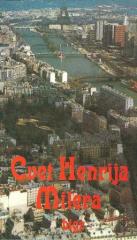
Cvet Henrija Milera

Cvet Henrija Milera

Henry Miller

The book Flower by Henry Miller is based on a selection from the best and most attractive works of this writer, following the chronological sequence in Miller's writing, giving Miller's most artistically mature pages.

BIGZ, 1988.
Serbisch. Latein Schrift. Taschenbuch.
5,32
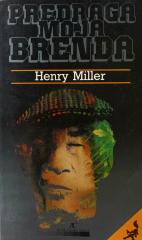
Predraga moja Brenda

Predraga moja Brenda

Henry Miller

Ljubavna pisma Henryja Millera Brendi Venus. Ako tražite Millerovu sirovu strast u nježnom epilogu, ovo je emotivan uvid u srce buntovnika – dirljivo, duhovito i neodoljivo.

August Cesarec, 1987.
Kroatisch. Latein Schrift. Taschenbuch.
4,32
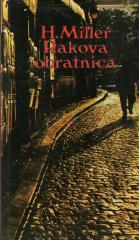
Rakova obratnica

Rakova obratnica

Henry Miller

Ovo je optužba, kleveta, osobna uvreda. Ovo nije knjiga, u običnom smislu te riječi. Ne, ovo je neprekidno vrijeđanje, ispljuvak u lice Umjetnosti, noga u tur Bogu, Čovjeku, Sudbini, Vremenu, Ljubavi, Ljepoti…čemu god hoćete.

Sveučilišna naklada Liber (SNL), 1981.
Kroatisch. Latein Schrift. Fester Einband mit Schutzumschlag.
6,30 - 7,56
Crna kiša nad Hirošimom

Crna kiša nad Hirošimom

Ibuse Masuđi

Crna kiša je roman Masuđa Ibusea, po kojem je 1989. Shōhei Imamura snimio istoimeni film. Priča se bavi posljedicama atomskog bombardiranja Hirošime i njegovim učinkom na preživjelu obitelj.

Narodna knjiga, 1982.
Serbisch. Latein Schrift. Taschenbuch.
9,99
Trasa union Pacifika

Trasa union Pacifika

Zane Grey
Otokar Keršovani, 1963.
Kroatisch. Latein Schrift. Taschenbuch mit Einband.
2,99
Razbojnici

Razbojnici

Friedrich Schiller
Školska knjiga, 1974.
Kroatisch. Latein Schrift. Taschenbuch.
5,22