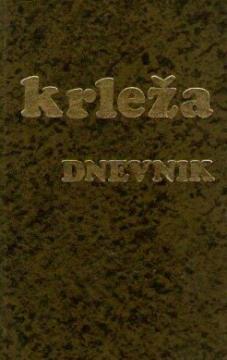
Dnevnik 2: Dnevnik 1918-22 (Davni dani II)

Dnevnik 2: Dnevnik 1918-22 (Davni dani II)

Miroslav Krleža

The Diary 1918–22 records Krleža's writings from the post-war years marked by the collapse of the Monarchy, the emergence of a new state, political fractures, and his increasingly harsh criticism of society, intellectuals, and ideological illusions.

Diary 1918–22 (Old Days II) continues the autobiographical arc begun in the war records, but now in a completely different atmosphere – in the years of turbulent post-war, revolutions, state reorganizations and profound social changes. In this diary, Krleža observes a time in which the collapse of Austria-Hungary brings a sense of freedom, but also disappointment: instead of the expected creation of a new, more just world, old patterns of power, nationalisms, political showdowns and ideological deviations appear on the scene.

The records reflect Krleža's disappointment with intellectuals who, instead of moral engagement, choose compromises and adaptation. He harshly comments on the petty-bourgeois mentality, cultural provincialism and the inability of society to face its own past. His blade is particularly pointed towards political illusions: Bolshevism as an ideal that is transformed into a repressive practice, as well as Yugoslav unitarism that creates new tensions. Krleža remains left-wing, but deeply critical of all forms of dogma and ideological blindness.

At the same time, Diary reveals his inner struggle. This is a period of personal and artistic searching, in which he records doubts about his own creativity, sketches future literary projects, and ponders the meaning of literature in a world full of violence and nonsense. The style is dense, fragmentary, full of intellectual associations and deeply emotional tones – a combination of historical reflection and introspective nakedness.

Krleža records the everyday life of Zagreb and the new state: political speeches, cafe conversations, cultural clashes, empty promises of revolutionary programs. One can feel the fatigue of a generation that expected social upheaval, but welcomed a new bureaucracy and old hypocrisy under new names. This is precisely why Diary 1918–22 carries a strong critical note: it is not just a personal note, but a testimony to an epoch in which idealism breaks under the weight of reality.

This book is a key document for understanding Krleža's worldview: his doubt, his moral unrest, and his obsession with truth. Davni dani II shows how one of the most important writers of the Yugoslav space was formed in the years when history was fractured – and how this fracture shaped his literature.

Editor
Enes Čengić, Anđelko Malinar
Maße
20 x 13 cm
Seitenzahl
459
Verlag
NIŠRO Oslobođenje, Sarajevo, 1981.
 
Latein Schrift. Hardcover.
Sprache: Kroatisch.

Angeboten wird ein Exemplar

Zustand:Gebraucht, in ausgezeichnetem Zustand
Reduzierter Preis: 6,785,09
Der Rabatt von 25 % gilt bis zum 07.09.2026 23:59 Uhr
Zum Warenkorb hinzugefügt!
 

Interessieren Sie sich für ein anderes Buch? Sie können das Angebot über unsere Suchmaschine suchen und finden oder Bücher nach Kategorien durchsuchen.

Diese Titel könnten Sie auch interessieren

Na rubu pameti

Na rubu pameti

Miroslav Krleža

Roman „Na ivici razuma“ (1938) je jedini Krležin roman napisan u prvom licu. Doktor prava moralno osuđuje moćnog industrijalca na banketu, time izazivajući opšti društveni bojkot, progon i sopstveni pad.

Jutarnji list, 2004.
Kroatisch. Latein Schrift. Fester Einband mit Schutzumschlag.
5,26 - 5,62
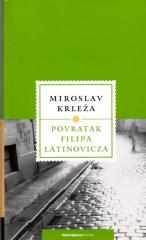
Povratak Filipa Latinovicza

Povratak Filipa Latinovicza

Miroslav Krleža

Povratak Filipa Latinovića jedan je od najpoznatijih romana Miroslava Krleže. Ovaj roman je značajan u našoj književnosti jer se smatra prvim potpuno modernim hrvatskim romanom.

Večernji list, 2004.
Kroatisch. Latein Schrift. Fester Einband mit Schutzumschlag.
5,523,86 - 5,56
Hrvatski bog Mars

Hrvatski bog Mars

Miroslav Krleža

Hrvatski bog Mars donosi sedam antiratnih romana u kojima Krleža prikazuje rat kao surovu, besmislenu mašineriju koja uništava „malog čoveka“, razotkrivajući licemerje militarizma i mitove o herojstvu.

Rad, 1965.
Serbisch. Latein Schrift. Taschenbuch.
1,99
Sol, ovce i kamenje

Sol, ovce i kamenje

Magdaléna Platzová

Svež, nesputan književni pogled na Dalmaciju. Četiri priče o Dalmaciji ispričane na način najboljih stranica češke književnosti. Oživljavajući mirise soli i mora, autor piše živopisnu prozu punu boja i ukusa.

Fraktura, 2006.
Kroatisch. Latein Schrift. Taschenbuch.
8,54
Dijalozi i eseji

Dijalozi i eseji

Giacomo Leopardi

Knjiga je zbirka odabranih tekstova iz Leopardijevih monumentalnih dela Zibaldona i Opereta Morali.

Zora, 1961.
Kroatisch. Latein Schrift. Fester Einband mit Schutzumschlag.
4,98
Poezija i zbilja

Poezija i zbilja

Johann Wolfgang Goethe

Geteova najveća autobiografska proza, napisana između 1811. i 1833. godine, obuhvata njegov život od rođenja 1749. u Frankfurtu do 1775. godine, kada je na poziv vojvode Karla Avgusta otišao u Vajmar.

Matica hrvatska, 1953.
Kroatisch. Latein Schrift. Fester Einband mit Schutzumschlag.
18,42