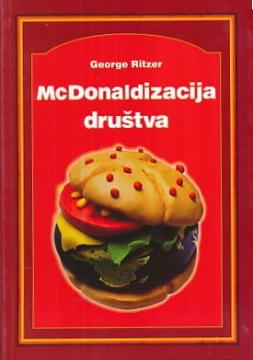
McDonaldizacija društva
Knjiga je postala klasik jer tačno opisuje svet Amazona, Ubera, Netfliksa i TikToka trideset godina unapred. Ricer ne proklinje brzu hranu, ali upozorava da ako se celo društvo pretvori u Mekdonalds, ostaćemo siti, ali gladni smisla.
U ovoj kultnoj knjizi, Džordž Ricer, američki sociolog, tvrdi da se moderno društvo ne razvija ka postmodernizmu ili informacionom dobu, već ka modelu koji je prvi usavršio Mekdonalds. On ovaj model naziva Mekdonaldizacijom i definiše ga kao proces u kojem principi brze hrane postaju dominantan način organizovanja gotovo svih sfera života.
Knjiga se oslanja na Maksa Vebera i njegovu tezu o racionalizaciji i „gvozdenom kavezu“ birokratije, ali Ricer ide korak dalje: današnja racionalnost nije birokratska, već racionalnost brze hrane, zasnovana na četiri stuba:
Efikasnost – optimizacija procesa kako bi se od potrebe došlo do zadovoljenja što je brže moguće (prodaja iz automobila, samostalno skeniranje u prodavnicama, onlajn porudžbine, gotovi obroci).
Proračunljivost – sve se meri brojevima: vreme, količina, cena. Kvalitet je sekundaran („30 sekundi ili besplatno“, 5-minutni tutorijali na Jutjubu, 15-minutni lekarski pregledi).
Predvidljivost – korisnik uvek dobija isto iskustvo, bez iznenađenja (isti meni u 120 zemalja, isti dizajn prodavnice, ista plejlista u Starbaksu).
Kontrola – ljudi su zamenjeni tehnologijom ili strogo skriptovani (roboti u Amazonovim skladištima, „osmeh broj 7“ zaposlenih, algoritmi koji odlučuju šta će gledati).
Ricer takođe uvodi petu, najopasniju posledicu – iracionalnost racionalnog sistema: naizgled savršena efikasnost stvara ogromnu štetu. Postoje „Mekposlovi“ (dosadan posao bez budućnosti), „MekUniverziteti“ (masovna nastava, MOOC-ovi, rangiranje), „MekBolnice“ (15 minuta po pacijentu), pa čak i „MekSeks“ (Tinder, brz i standardizovan).
U kasnijim izdanjima (2004, 2011, 2018), Ricer pokazuje kako se proces ubrzao: Amazon, Uber, Netfliks, Instagram i TikTok su savršeni primeri „Mekdonaldizacije 2.0“, gde korisnik eksploatiše samog sebe (isporučuje, ocenjuje, kreira sadržaj besplatno). Knjiga se završava upozorenjem: ako se ne odupremo, ceo naš život će postati džinovski prolaz kroz automobile – brz, jeftin, ukusan u početku, ali na kraju prazan i bezdušan.
I trideset godina kasnije, ovo je najtačnija dijagnoza sveta u kome živimo.
Jedan primerak je u ponudi