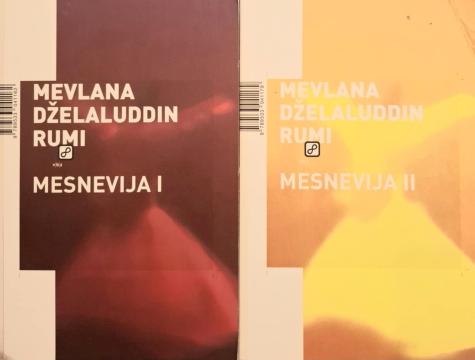
Mesnevija I-II

Mesnevija I-II

Mevlana Dželaludin Rumi

The Mesnevi, a masterpiece by the greatest mystical poet of the Islamic world, Mevlana Jalaluddin Rumi (1207-1273), written in the 13th century, undoubtedly ranks among the unadulterated literary, spiritual and cultural monuments of humanity in general.

With more than 25,000 verses, it is the most refined spiritual language, a hymn to God and a longing for an encounter with the One and Only. In its vast depths, like an ocean, it has housed all the comprehended and unfathomable knowledge, both about the world and about the transcendent. Completely in line with the Quranic vision of the world, it is a monument of metaphysical and folk language, the language of spiritual heights and the language of plants and animals, the language of the hidden and the revealed, the language of the microcosm, the language of the spiritual heart and the universal language, but at the same time - both hierocosmic and metahistorical. Its poetic imagination and song about the meaning of human existence, its call to transcend one's own self in search of the wine of divine Love, which of course is not made of vines and grapevines but the wine of spiritual union, is an inimitable structure of the spirit. M. Iqbal called Rumi a lamp on the path of a free man. Although he was a pearl from the East, his heart transcended geography. It belonged, and increasingly belongs, to both the East and the West, the North and the South. After all, since the American poet Coleman Barks published an English translation of a selection of his work in 1995, which was little known to the general public until then, Rumi has become the most widely read poet in America after W. Whitman in just a few years. Although he lived in the Middle Ages, the power of his verse still rings true today – 2007 has been marked the year of Rumi worldwide.

Original title
Mathnawy
Translation
Velid Imanović
Editor
Sandra Ukalović
Dimensions
23.5 x 15.5 cm
 
The book consists of two volumes.
Pages total
609
Publisher
VBZ, Zagreb, 2009.
 
Latin alphabet. Paperback.
Language: Croatian.

No copies available

The last copy was sold recently.
 

Are you interested in another book? You can search the offer using our search engine or browse books by category.

You may also be interested in these titles

Luda priča i ostale pjesme za djecu

Luda priča i ostale pjesme za djecu

Pero Budak

Short, rhythmic, playful and humorous poems portray the world from a child's perspective, simultaneously entertaining and gently teaching.

Intergraf, 1975.
Croatian. Latin alphabet. Paperback.
3.26
Prognane elegije : Izabrane pjesme

Prognane elegije : Izabrane pjesme

Mile Stojić

In his best poems, Stojić skillfully intertwines poetry and a unique engagement.

Civitas, 2004.
Croatian. Latin alphabet. Paperback.
4.98
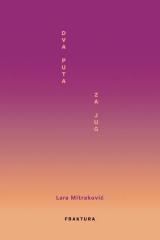
Dva puta za jug

Dva puta za jug

Lara Mitraković

The intense saturation and density of this poetry make it impossible to read this book in one sitting. It must be taken slowly and measuredly, as each poem requires a longer process of reception.

Fraktura, 2019.
Croatian. Latin alphabet. Hardcover with dust jacket.
7.985.99
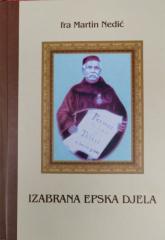
Izabrana epska djela

Izabrana epska djela

Fra Martin Nedić

Fra Martin Nedić prvi je bosanski ilirac, jedan od otaca ilirskoga pokreta, vodeći intelektualac svojega doba, crkveni diplomat, franjevački redodržavnik, graditelj, prosvjetni radnik, povjesničar i književnik.

Matica hrvatska, 2022.
Croatian. Latin alphabet. Hardcover.
13.98
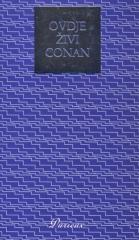
Ovdje živi Conan

Ovdje živi Conan

Miljenko Jergović

Mlada bosanska lirska poezija 1992.-1996.

Durieux, 1997.
Croatian. Latin alphabet. Paperback.
8.986.74
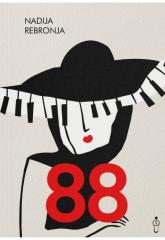
88

88

Nadija Rebronja

A piano usually has 88 keys, 52 white and 36 black, from which 88 tones emerge. A pianist usually reads 88 notes. These 88 micro-proses simultaneously constitute one piano and one piano concerto.

Buybook, 2022.
Croatian. Latin alphabet. Paperback.
5.94