Crnac

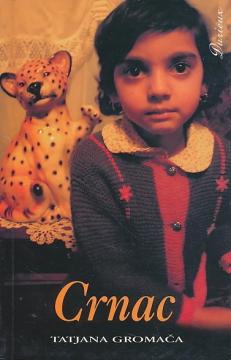
Crnac

Tatjana Gromača

The novel The Black Man begins with the sentence “The house we lived in was wooden.” Wooden houses are reserved for fairy tales and stories for children.

The author does indeed write about childhood, a childhood that could be hers, but the narrator has no name, nor does the village she lives in, nor the city she goes to study in. The novel is composed of short fragments that sometimes read as short stories, sometimes as flashes of memory, and sometimes as prose poems. There are no elements of a fairy tale in the narrator's childhood, quite the opposite. In the suburbs of a provincial town known for its heavy industry, the child grows up surrounded by poverty, provincialism, and the subtle terror of people living empty lives. Going to study in a big city doesn't change anything either. The streets are bigger, a little better lit, but people with "empty gazes" still follow her. Gromača writes about the same Eastern European poverty described by Slavenka Drakulić, the same attitude towards women that Dubravka Ugrešić wrote about, but her prose fragments are closer to Danilo Kiš's novel The Garden, Ashes, Milan Kundera's The Joke, Agota Kristof's The Great Notebook, and Szymborska's poetry. Tatjana, like all good poets, knows how to say a lot with few words.

Editor
Nenad Popović
Dimensions
20 x 13 cm
Pages
159
Publisher
Durieux, Zagreb, 2004.
 
Latin alphabet. Paperback.
Language: Croatian.

One copy is available

Condition:Used, excellent condition
Discounted price: 6.004.50 €
25% discount is valid until 10/15/26 11:59 pm
 

Are you interested in another book? You can search the offer using our search engine or browse books by category.

You may also be interested in these titles

Vezana

Vezana

Lauren Henderson

Mistakenly kidnapped and tied to a ceiling beam, Sam Jones tries to remember her special love adventure. The painful blows, along with her innate humor, will encourage the heroine to focus all her peace of mind on solving life's problems.

Škorpion, 2002.
Croatian. Latin alphabet. Hardcover.
7.36 €
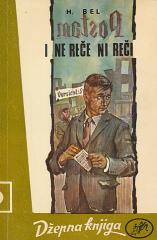
I ne reče ni reči

I ne reče ni reči

Heinrich Böll

In Boll's novels, one of the central themes is the attempt to preserve basic moral values ​​in a time of terror, as well as in a period of material prosperity and corruption.

Svjetlost, 1965.
Serbian. Latin alphabet. Paperback.
3.22 - 3.98 €
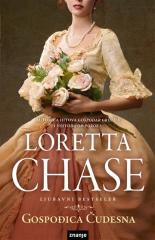
Gospođica čudesna

Gospođica čudesna

Loretta Chase

Der erste Band der Carsington-Brothers-Reihe ist eine Liebesgeschichte aus der Regency-Zeit, die im Derbyshire der 1820er Jahre spielt. Loretta Chase, eine Meisterin witziger Liebesgeschichten, verbindet Humor, Spannung und tiefgründige Charaktere in eine

Znanje, 2017.
Croatian. Latin alphabet. Paperback.
3.72 - 3.74 €
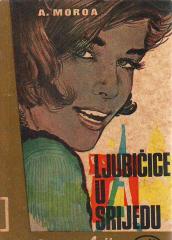
Ljubičice u srijedu

Ljubičice u srijedu

Andre Maurois

André Maurois, ein französischer Schriftsteller, der für seine psychologischen Romane und Biografien bekannt ist, behandelt in diesem für seinen Stil charakteristischen Werk Themen wie Familienbeziehungen, Liebe und innere Konflikte.

Svjetlost, 1965.
Croatian. Latin alphabet. Paperback.
3.42 - 3.62 €
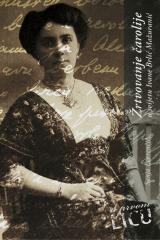
Žrtvovanje čarolije u svijetu Ivane Brlić Mažuranić

Žrtvovanje čarolije u svijetu Ivane Brlić Mažuranić

Sanja Lovrenčić

Die in diesem Buch versammelten Essays enthüllen die Ursprünge und Umwege von Sanja Lovrenčićs jahrelanger Suche nach dem authentischen Charakter von Ivana Brlić Mažuranić.

Mala zvona, 2024.
Croatian. Latin alphabet. Paperback.
12.98 €
Život je igra

Život je igra

Moravia
Alberto Moravia

Das Buch besteht aus mehreren Geschichten, die die Komplexität des menschlichen Verhaltens untersuchen, oft durch eine ironische und satirische Darstellung des Alltagslebens.

Svjetlost, 1965.
Serbian. Latin alphabet. Paperback.
3.46 - 3.72 €