Immanuel Kant

Immanuel Kant (Königsberg, Prussia—now Kaliningrad, Russia—April 22, 1724 – Königsberg, February 12, 1804) was a German philosopher, one of the most important figures of the Enlightenment and the founder of critical philosophy. His work marked a turning point in the history of Western thought, particularly in the fields of epistemology, ethics, metaphysics, and aesthetics.
He spent his entire life in Königsberg and its surrounding area. He studied philosophy, mathematics, and the natural sciences at the local university, where he later taught logic and metaphysics. In 1770, he became a full professor. He was known for his disciplined lifestyle, broad scientific interests, and systematic philosophical work.
In his most important work, Critique of Pure Reason (1781), he explores the possibilities and limits of human knowledge. He developed the concept of transcendental idealism, according to which our experience of the world is shaped by a priori forms of sensibility and categories of the understanding. He distinguished between appearances (phenomena), which we can know, and things-in-themselves (noumena), which remain beyond the limits of theoretical knowledge.
In Critique of Practical Reason (1788), he elaborated an ethics based on duty, freedom, and the autonomy of the moral subject. Its central principle, the categorical imperative, requires that we act according to rules that we could will to become a universal law. His third major work, Critique of Judgment (1790), is dedicated to aesthetics, the experience of the beautiful and the sublime, and purposiveness in nature.
Other notable works include Prolegomena to Any Future Metaphysics (1783), Groundwork of the Metaphysics of Morals (1785), Religion within the Bounds of Bare Reason (1793), Perpetual Peace (1795), and The Metaphysics of Morals (1797).
In his famous essay An Answer to the Question: What Is Enlightenment? (1784), Kant emphasized the importance of the independent use of reason. His philosophy profoundly influenced German idealism, modern ethics, political philosophy, and contemporary epistemology, and his questions regarding knowledge, morality, and freedom remain fundamental to philosophy.
Naslovi u ponudi
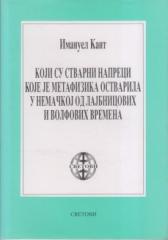
Koji su stvarni napreci koje je metafizika ostvarila u Nemačkoj od Lajbnicovih i Volfovih vremena
Kant preispituje razvoj njemačke metafizike od Leibniza i Wolffa do kritičke filozofije, istražujući granice ljudskog razuma i mogućnost pouzdane metafizičke spoznaje.
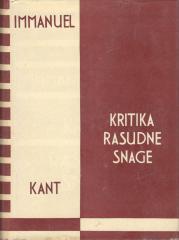
Kritika rasudne snage
Kant istražuje prirodu ljepote, uzvišenosti i svrhovitosti u prirodi, povezujući estetiku s ljudskom spoznajom i moralom. Temeljno djelo moderne estetike i filozofije umjetnosti.
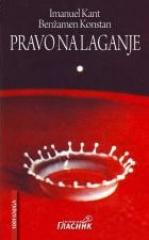
Pravo na laganje
Kant je tvrdio da ne postoji pravo na laganje jer je govorenje istine apsolutna dužnost, dok je Constant zagovarao mogućnost iznimke od dužnosti, tvrdeći da treba lagati za opće dobro, što je izazvalo čuvenu filozofsku raspravu.
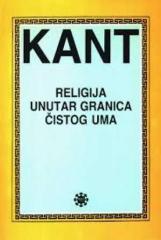
Religija unutar granica čistog uma
Kant istražuje odnos religije, morala i ljudskog razuma, propitujući prirodu zla, slobodu volje i smisao vjere. Ključno djelo o mogućnosti religije utemeljene na etici i racionalnom mišljenju.