The Glass Room

The Glass Room

Simon Mawer

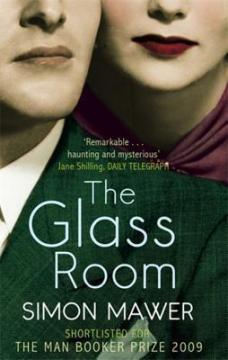
Brimming with barely contained passion and cruelty, the precision of science, the wild variance of lust, the catharsis of confession, and the fear of failure - the Glass Room contains it all.

Honeymooners Viktor and Liesel Landauer are filled with the optimism and cultural vibrancy of central Europe of the 1920s when they meet modernist architect Rainer von Abt. He builds for them a home to embody their exuberant faith in the future, and the Landauer House becomes an instant masterpiece. Viktor and Liesel, a rich Jewish mogul married to a thoughtful, modern gentile, pour all of their hopes for their marriage and budding family into their stunning new home, filling it with children, friends, and a generation of artists and thinkers eager to abandon old-world European style in favor of the new and the avant-garde. But as life intervenes, their new home also brings out their most passionate desires and darkest secrets. As Viktor searches for a warmer, less challenging comfort in the arms of another woman, and Liesel turns to her wild, mischievous friend Hana for excitement, the marriage begins to show signs of strain. The radiant honesty and idealism of 1930 quickly evaporate beneath the storm clouds of World War II. As Nazi troops enter the country, the family must leave their old life behind and attempt to escape to America before Viktor's Jewish roots draw Nazi attention, and before the family itself dissolves.

As the Landauers struggle for survival abroad, their home slips from hand to hand, from Czech to Nazi to Soviet possession and finally back to the Czechoslovak state, with new inhabitants always falling under the fervent and unrelenting influence of the Glass Room. Its crystalline perfection exerts a gravitational pull on those who know it, inspiring them, freeing them, calling them back, until the Landauers themselves are finally drawn home to where their story began.

Dimensions
20 x 13 cm
Pages
406
Publisher
Abacus, London, 2009.
 
Latin alphabet. Paperback.
Language: English.
ISBN
978-0-34912-132-1

One copy is available

Condition:Used, excellent condition
Discounted price: 8.466.35
25% discount is valid until 7/7/26 11:59 pm
 

Are you interested in another book? You can search the offer using our search engine or browse books by category.

You may also be interested in these titles

Magična ljubavna kutijica

Magična ljubavna kutijica

Santa Montefiore

The Magic Love Box (2002) follows the life story of Federica Campione, which begins in Vina del Mar, Chile, in the summer of 1982. Montefiore creates an epic story of growth, where the magic is not only in the box, but in the courage to let go of the past

Mozaik knjiga, 2006.
Croatian. Latin alphabet. Hardcover.
7.34
Kvaka braka

Kvaka braka

Melanie Gideon

Melanie Gideon, an American writer known for her humorous novels about family dynamics, dissects the monotony of marriage in the age of social media in The Marriage Trap (2012).

Algoritam, 2013.
Croatian. Latin alphabet. Paperback.
7.36
Seks skandal 2: Političari u krevetu

Seks skandal 2: Političari u krevetu

Izabela D.

The sequel to the ultimate hit Sex Scandal: Confessions of a Zagreb Model, Sex Scandal 2: Politicians in Bed, exposes the moral underbelly of Croatian politicians who publicly act as selfless fighters for the common good, while privately indulging in lust

24 sata.
Croatian. Latin alphabet. Paperback.
2.36
U Kordiljerima

U Kordiljerima

Karl May

In the Cordilleras (1894) is an adventure novel, a sequel to On the Rio de la Plata, part of May's South American cycle. The book follows adventures in Argentina during the revolutions, emphasizing themes of justice, forgiveness, and the struggle with the

Stvarnost, 1966.
Croatian. Latin alphabet. Hardcover.
4.52 - 7.32
Brdo

Brdo

Ivica Prtenjača

It is a deeply disturbing text, full of emotions and traumatic experiences of a collapsed, imploded urban individual crying out for the meaning of life.

VBZ, 2014.
Croatian. Latin alphabet. Paperback.
7.825.47
Zagrepčanka

Zagrepčanka

Branislav Glumac

Branislav Glumac published a novel without periods or commas in 1974, as the relentless stream of thought of a young rebel. Published in socialist Yugoslavia, the work caused a scandal with its openness and became a classic about generational rebellion.

IROS, 1986.
Croatian. Latin alphabet. Hardcover.
8.24