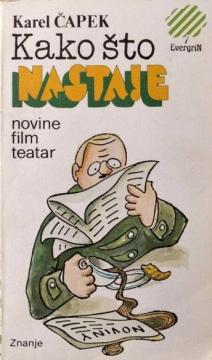
Kako što nastaje: novine, film, teatar

Kako što nastaje: novine, film, teatar

Karel Čapek

In a witty and instructive essay, Čapek describes how a newspaper, a film, and a theater play are created. Through humor and irony, he shows the complexity of the process – from idea to realization – and the different perspectives of the participants, dem

How ​​It's Made (1925/1930s) is a collection of essays and humorous texts by Karel Čapek, in which the author explains in an entertaining, unobtrusive and very insightful way how three key media and art forms of the 20th century are "born": newspapers, film and theatre.

The book is divided into three main parts:

  • How ​​It's Made – Čapek describes the chaos in the editorial office: the conflict between the editor, journalists, the printing house and the administration. Each group thinks that it is the most important one – the editor sees the newspaper as a thought, the printer as a mechanical process, and the administration as accounts. The author uses anecdotes and irony to show how a daily newspaper is born from this struggle.
  • How ​​It's Made – a detailed account of the filmmaking process: script, storyboard, shots, sequences, direction, actors, editing. Čapek shows how much film is a collective work, full of compromises, technical challenges and coincidences – from idea to screen.
  • How ​​a Theater Play is Made – the most famous part, where Čapek (as playwright and author) guides the reader through the entire process: writing the text, conversations with the director, casting roles, rehearsals, conflicts between actors and directors, set design, premiere. Everything is permeated with humor – actors complain, the director changes, the audience expects miracles.

The book is illustrated by the author's brother Josef Čapek, which adds charm and visual wit. The style is light, lively, full of irony and self-irony – Čapek demystifies "artistic genius" and shows that newspapers, films and theater are, above all, human, imperfect processes full of misunderstandings, ego and work.

This is not a dry instruction manual, but an essayistic treat that reveals the behind-the-scenes of the culture of the 1920s/30s. It is still relevant today: it shows how media and art emerge from the chaos of collaboration, not from divine inspiration. Perfect for fans of Čapek, media history, or those who want to understand "how things are done" behind the scenes.

Naslov izvornika
Jak se co dělá
Prijevod
Nikola Kršić
Urednik
Zlatko Crnković
Ilustracije
Josef Čapek
Naslovnica
Alfred Pal
Dimenzije
19 x 12 cm
Broj strana
173
Nakladnik
Znanje, Zagreb, 1985.
 
Latinica. Broširano.
Jezik: Hrvatski.

Jedan primjerak je u ponudi

Stanje:Korišteno, u odličnom stanju
Dodano u košaricu!
 

Zanima Vas i neka druga knjiga? Možete pretražiti našu ponudu pomoću tražilice ili prelistati knjige po kategorijama.

Možda će Vas zanimati i ovi naslovi

Rat ljudi i daždevnjaka

Rat ljudi i daždevnjaka

Karel Čapek
Beogradski grafičko-izdavački zavod, 1975.
Srpski. Latinica. Broširano.
2,99
Prva smjena

Prva smjena

Karel Čapek
Nakladno poduzeće Glas rada, 1952.
Hrvatski. Latinica. Broširano s ovitkom.
4,993,49
Pripovetke iz levog i desnog džepa

Pripovetke iz levog i desnog džepa

Karel Čapek

Diese Geschichten befassen sich mit unterschiedlichen Themen, wobei es in den meisten Fällen um unterschiedliche Straftaten geht, von Betrug und Wahrsagerei bis hin zu Ehebetrug und Mord.

Jugoslavijapublik, 1980.
Hrvatski. Latinica. Tvrde korice.
5,22
Poezija i zbilja

Poezija i zbilja

Johann Wolfgang Goethe

Goethes bedeutendstes autobiografisches Prosawerk, entstanden zwischen 1811 und 1833, umfasst sein Leben von seiner Geburt 1749 in Frankfurt bis 1775, als er auf Einladung von Herzog Karl August nach Weimar ging.

Matica hrvatska, 1953.
Hrvatski. Latinica. Tvrde korice s ovitkom.
18,42
Sizifova sreća - razgovori, kronike

Sizifova sreća - razgovori, kronike

Ivan Lovrenović

Ivan Lovrenovićs Sammlung dokumentiert dreißig Jahre des Wandels in Bosnien und Herzegowina anhand von Interviews, Essays und Dialogen. Der Autor, ein Zeitzeuge dieser Ära, untersucht alte Denkweisen in der neuen Realität und betont den Verfall von Ration

Synopsis, 2018.
Hrvatski. Latinica. Broširano.
12,54
Dunav: P.S. 1991. vukovarske razglednice

Dunav: P.S. 1991. vukovarske razglednice

Pavao Pavličić

Eine bewegende und ergreifende Chronik der Belagerung und Zerstörung von Vukovar im Jahr 1991, verfasst in 57 kurzen, postkartenartigen Kapiteln. Pavličić schreibt nicht aus der Perspektive eines „gewöhnlichen“ Zagreber Bürgers, der den Sommer 1991 in Vuk

Hena Com, 1999.
Hrvatski. Latinica. Tvrde korice.
11,26