Mistika

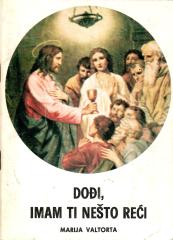
Dođi, imam ti nešto reći
"Come, I Have Something to Tell You" is one of the popular collections of spiritual reflections and messages by Maria Valtorta (1897–1961), an Italian mystic and visionary known for her extensive work "The Gospel as Revealed to Me."
Drugi krug moći

Castaneda's fourth book, which continues his journey through the world of Mexican shamanism, but with a new focus: relationships with Don Juan's female students and deepening the teachings on the dual aspect of consciousness - the first and second circles

Knjiga Mirdadova: čudnovata priča o samostanu koji se jednom nazivaše Arkom
"The Book of Mirdad", a timeless allegorical story that never ceases to show new generations how by losing the sense of duality, human consciousness can be expanded and God in man can be discovered.
Mistika
The book deals with an in-depth analysis of mystical experiences in different religious traditions, with an emphasis on Christianity and Islam. Gardet, a French theologian and orientalist, explores mysticism as a universal phenomenon that transcends cultu

Odvojena stvarnost: Nastavak razgovora s don Huanom
"A Separate Reality" is the second book by Carlos Castaneda in which the author continues to document his teachings with Don Juan Matús, an Indian shaman from Mexico. The book's afterword was written by Mirko Magarašević.
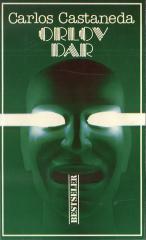
Orlov dar
„The Eagle’s Gift“ ist nicht nur ein schamanisches Handbuch, sondern auch eine philosophische Meditation über die Natur der Realität, den Tod und die Möglichkeit der Transzendenz. Castaneda lädt den Leser ein, seine eigenen Vorstellungen von der Welt zu h
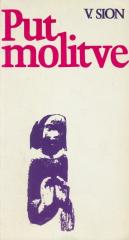
Put molitve s Terezijom iz Lisieuxa
Das Büchlein führt den Leser in eine einfache, vertrauensvolle Beziehung zu Gott, inspiriert vom „kleinen Weg“ der heiligen Therese von Lisieux, und zeigt, wie das Gebet aus Kleinheit, Vertrauen und täglicher Andacht entsteht.

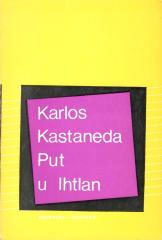
Put u Ihtlan
„Die Reise nach Ihtlan“ ist das dritte veröffentlichte Buch von Carlos Castaneda, obwohl es chronologisch einen frühen Teil seiner Studien bei Don Juan darstellt. Dieses Buch markiert einen Wendepunkt in Castanedas Erzählung – es geht weniger um Halluzino