Pearl S. Buck

Pearl S. Buck (born Pearl Sydenstricker Buck), an American writer, novelist, and humanitarian, was born on June 26, 1892, in Hillsboro, West Virginia, and died on March 6, 1973, in Danby, Vermont. She was the recipient of the 1932 Pulitzer Prize and the 1938 Nobel Prize in Literature, becoming the first American woman to be awarded that literary honor.
She grew up in China, where her parents served as missionaries. From childhood, she was familiar with the Chinese language, customs, and culture, all of which strongly shaped her literary body of work. She studied in the United States and subsequently returned to China, where she lived and taught for many years.
She began her literary career with the novel East Wind: West Wind (1930), in which she explores the encounter between Eastern and Western cultures, family relationships, and the status of women.
She achieved worldwide fame with the novel The Good Earth (1931), a poignant story about the Chinese farmer Wang Lung and his family. The novel depicts the hard life of peasants, the connection between humanity and the land, poverty, and social change, and it earned the author the Pulitzer Prize. The work is the first part of the House of Earth trilogy, continued by the novels Sons (1932) and A House Divided (1935). Her notable works include The Mother (1934), Fighting Angel (1936), Dragon Seed (1942), Imperial Woman (1956), and Pavilion of Women (1946). In her autobiographical books My Several Worlds and A Bridge for Passing, she describes her personal experiences and life between two cultures.
In addition to her literary work, Buck advocated for women's rights, racial equality, international understanding, and child welfare. She founded organizations that assisted children of mixed heritage and children lacking adequate parental care.
Her style is characterized by simplicity of expression, deep emotion, realistic descriptions, and a profound understanding of human destinies. Pearl S. Buck left an enduring mark on world literature by introducing Western readers to Chinese culture, family life, and the universal values of humanity, compassion, and dignity.
Titel im Angebot

Dobra zemlja
Pearl S. Buck depicts the life of Chinese peasant Wang Lung, his rise from poverty to wealth, and the disintegration of family ties. The novel explores the relationship between man and land, tradition, social change, and moral challenges.

Eine Liebesehe / Das Gelöbnis
"One Marriage" is a more intimate, psychological portrait of marriage, while "The Promise" is an epic war novel. Both works reflect an author who lived in China and had a deep understanding of the conflicts between East and West.

Jedan brak
The main character is Hanako, a young Japanese woman educated at an American university, who returns to a devastated Tokyo after the war.
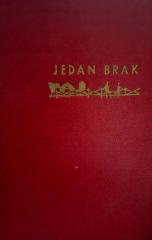
Jedan brak
The novel One Marriage by American author Pearl S. Buck deals with a love story that develops between two people from completely different cultural and social backgrounds in the post-war period.

Lebendiger Bambus
The novel depicts the history of Korea through the fate of one family, highlighting the struggle for freedom, the preservation of tradition, and the power of human perseverance.

Mati
A novel about a Chinese peasant woman who, after her husband leaves, raises her children alone, struggling with poverty, loneliness and social pressures, in a poignant story of motherhood and endurance.

Peonija, cvijet Istoka
A novel by American Nobel laureate Pearl S. Buck, set in the 19th century Chinese city of Kaifeng, known for its Jewish community. The story follows Peony, a young Chinese maid in the home of the prominent Jewish family of Ezra ben Israel.
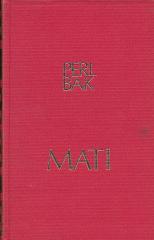
Sabrana dela 10: Mati
A poor Chinese peasant woman, abandoned by her husband, raises three children alone, struggling with hunger, poverty and social pressures. A moving story of maternal strength and sacrifice.
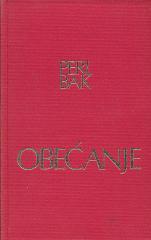
Sabrana dela 11: Obećanje
The Promise (1943) is a direct sequel to the novel Dragon Seed. The story takes place during World War II, mainly in Burma in 1942, as the Japanese advance through Asia.
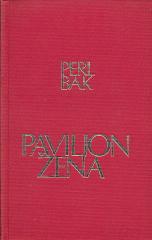
Sabrana dela 12: Paviljon žena
The novel The Pavilion of Women (1946) is one of Pearl S. Buck's most intimate and subtle stories. It is set among the old, wealthy Chinese Wu family, in the years immediately before the Japanese invasion.