Egmont: Tragedija u pet činova

Goethe’s tragedy depicts Count Egmont’s struggle against Spanish tyranny in the 16th-century Netherlands. His devotion to freedom and the people leads to a conflict with the authorities, imprisonment, and a tragic death.
The tragedy Egmont: A Tragedy in Five Acts (Egmont: Ein Trauerspiel in fünf Aufzügen, 1788) by Johann Wolfgang von Goethe is a historical drama concerning freedom, political repression, personal honor, and the conflict between an individual and an absolutist regime. The plot is set in 16th-century the Netherlands, a time of resistance against Spanish rule and religious persecution under King Philip II.
The protagonist, Count Lamoral of Egmont, is a popular military commander and advocate for the people's freedoms; he enjoys the trust of the populace but underestimates the danger posed by political intrigue. Unlike the cautious William of Orange, Egmont believes in his own integrity and the possibility of reaching an agreement with the ruler. With the arrival of the ruthless Duke of Alba, political tensions escalate into overt repression, leading to Egmont’s arrest and subsequent death sentence.
Running parallel to the political plot is a love story between Egmont and Klärchen, a young woman from the common citizenry, whose devotion and attempt to save her beloved end in tragedy. Her fate further underscores the conflict between personal happiness and historical circumstances.
In the final act, facing his execution, Egmont experiences a symbolic vision of freedom—one that transforms his death into a moral victory over tyranny. Goethe bridges historical events with the ideals of the Enlightenment and the Sturm und Drang movement, crafting a hero whose nobility serves as both his greatest strength and his political weakness.
The work explores the relationship between freedom and responsibility, idealism and political realism, as well as the price of resisting the arbitrary power of the authorities. The tragedy is further known for the incidental music by Ludwig van Beethoven, composed in 1810.
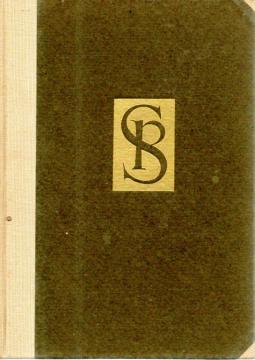
Angeboten wird ein Exemplar