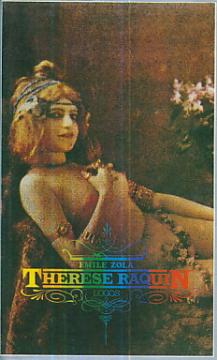
Therese Raquin

Therese Raquin

Émile Zola

The novel Thérèse Raquin, written in 1867, is the first literary success of the French author Émile Zola and also the first naturalistic novel.

Emile Zola is considered the originator of naturalism, a period that could roughly be limited to the period between 1870 and 1890. Naturalism is a literary direction that continues realism and depicts visible reality and human nature in even more detail and consistency. According to the naturalistic understanding, man is determined by three things: his heritage, environment and moment (i.e. the circumstances in which he finds himself). It was this naturalistic view that Zola consistently applied to his work, describing the harsh reality and events that revolve around two characters who are completely mastered by their animal instincts and ultimately destroyed by them.

This unique story, intertwined with lies, passion, adultery, crimes, murders and violence, made young Zola famous and raised his reputation to a higher level and intrigued a certain group of readers, but at the same time caused outrage among his contemporaries, primarily because of his subject, and then also because of the way it is presented.

Zola, having received many insults at the expense of his work, defended himself by adding a preface to the second edition of the novel (which is considered a kind of manifesto of the naturalist movement itself), thereby defending and clarifying the main ideas that were to come in this novel, given that critics had misinterpreted it :

"At Thérèse Raquin, I wanted to study temperaments, not characters. That's what the whole book is about. I have chosen characters who are sovereignly ruled by their nerves and their blood, so they are deprived of every gift of free judgment and in every act of their life they are driven by the evil fate of their path. Therese and Laurent are human animals and nothing more."

Übersetzung
Božidar Zajčić
Editor
Ivo Sanader
Titelseite
Nenad Dogan
Maße
20 x 12,5 cm
Seitenzahl
210
Verlag
Logos, Split, 1985.
 
Auflage: 10.000 Exemplare
 
Latein Schrift. Fester Einband mit Schutzumschlag.
Sprache: Kroatisch.

Im Angebot sind keine Exemplare vorhanden

Das letzte Exemplar wurde kürzlich verkauft.


Interessieren Sie sich für ein anderes Buch? Sie können das Angebot über unsere Suchmaschine suchen und finden oder Bücher nach Kategorien durchsuchen.

Diese Titel könnten Sie auch interessieren

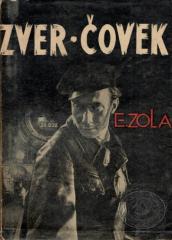
Zver-čovek

Zver-čovek

Émile Zola

Roman istražuje destruktivne sile nasleđa, strasti i nasilja u modernom industrijskom društvu. Radnja se odvija uglavnom na železnici, simbolu brzine, sudbine i neizbežne propasti. „Čovek zver” je prvi opis kriminala u industrijskom svetu.

Nolit, 1940.
Serbisch. Latein Schrift. Taschenbuch mit Einband.
56,32
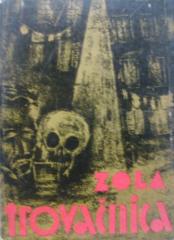
Trovačnica

Trovačnica

Émile Zola

Roman Trovačnica je objavljen u nastavcima tokom 1876, a u obliku knjige u 1877. To je priča o borbi žene za sreću u radničkoj klasi Pariza.

Rad, 1955.
Serbisch. Latein Schrift. Fester Einband mit Schutzumschlag.
8,62 - 9,99
Stranica ljubavi

Stranica ljubavi

Émile Zola
Rad, 1974.
Serbisch. Latein Schrift. Hardcover.
5,84
Proces

Proces

Franz Kafka

Kafka schrieb „Der Prozess“ zwischen 1914 und 1915 und veröffentlichte es posthum im Jahr 1925. Der Roman ist unvollendet, wurde aber um ein letztes Kapitel von Max Brod ergänzt. Ausgabe mit einem Vorwort von B. Živojinović und einem Nachwort von Walter K

BIGZ, 1990.
Serbisch. Latein Schrift. Taschenbuch.
4,26
Tri mušketira 1-2

Tri mušketira 1-2

Alexandre Dumas

Dumasova verzija priče prikazuje avanture d’Artagnana i njegovih prijatelja od 1625 do 1628.

Epoha, 1966.
Kroatisch. Latein Schrift. Fester Einband mit Schutzumschlag.
Das Buch besteht aus zwei Bänden
9,48
Rudnik čvaraka

Rudnik čvaraka

Tomislav Šovagović

Debitantsko djelo hrvatskog pisca Tomislava Šovagovića, nagrađeno nagradom Josip i Ivan Kozarac 2012., posveta je Slavoniji – regiji djetinjstva koju autor, rođen u Dalmaciji, promatra stranim, ali nježnim očima.

Mozaik knjiga, 20112.
Kroatisch. Latein Schrift. Taschenbuch.
11,56