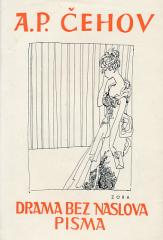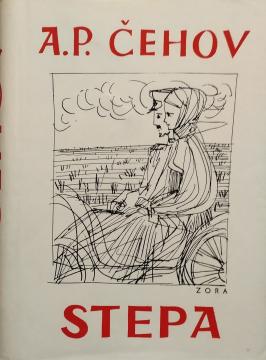
Sabrana djela A. P. Čehova #6: Stepa i druge novele
Ein rares Buch

Sabrana djela A. P. Čehova #6: Stepa i druge novele

Anton Pavlovič Čehov

This book contains the narrative work of the great Russian writer, A. P. Chekhov, from the years 1888-1892. In it, we will no longer encounter the small humorous stories with which "Antoša Čehonte" brilliantly began his career in humor magazines.

From Steppe (1888), one of his longest stories, full of landscapes, to Pavilion No. 6 from 1892, he addressed a number of current problems of his time: he decisively dealt with Turgenev's "superfluous people" (Duel, 1891), and especially with Tolstoy's ideology of non-resistance to evil (in the aforementioned story Pavilion No. 6). In addition to confronting previous attitudes, his stories, despite their apparent external disinterest, carry within them a series of deep and peculiar problems, which are often not only personal problems, but also general social ones (Napadaj gnošanja, 1888, Žena, 1892, and especially Susjedi, 1892.)

The analysis of subtle human weaknesses and weaknesses, when a person does something, but does not want to do it himself, is best done in the story Susjedi (1892), again seemingly with the treatment of a social problem, but in fact with a greedy delving into the essence of man's "to be or not to be".

In addition, as we have mentioned, this book contains his famous stories: Steppe, already known to Yugoslav readers, A Boring History (1889), which, despite its title, is one of Chekhov's most successful narrative creations. However, the crowning glory of this work is Pavilion No. 6, about which story Lenin said that, after reading it, he felt the downfall of Andrei Yefimitch, imprisoned in a madhouse, and that all of Russia seemed to him like Pavilion No. 6. And that is why few readers will leave this book without reading Pavilion No. 6 to the end.

Übersetzung
Desanka Maksimović, Jovan Maksimović, Martin Lovrenčević, Maja Mulić, Nana Bogdanović, Tomislav Prpić, Iso Velikanović, Roman Šovary
Editor
Novak Simić
Titelseite
Edo Murtić
Maße
20 x 15 cm
Seitenzahl
537
Verlag
Zora, Zagreb, 1960.
 
Latein Schrift. Fester Einband mit Schutzumschlag.
Sprache: Kroatisch.

Angeboten wird ein Exemplar

Zustand:Ungebraucht
Zum Warenkorb hinzugefügt!
 

Interessieren Sie sich für ein anderes Buch? Sie können das Angebot über unsere Suchmaschine suchen und finden oder Bücher nach Kategorien durchsuchen.

Diese Titel könnten Sie auch interessieren

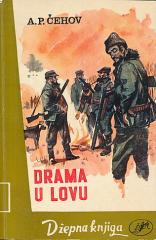
Drama u lovu

Drama u lovu

Anton Pavlovič Čehov

Unter den zahlreichen Werken Tschechows, die sowohl in unserem Land als auch in der Welt übersetzt wurden, ist sein Roman „Drama auf der Jagd“ ein weniger bekanntes Werk dieses großen Schriftstellers.

Svjetlost, 1963.
Kroatisch. Latein Schrift. Taschenbuch.
3,96 - 3,98
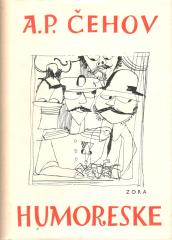
Sabrana djela A. P. Čehova #1: Humoreske

Sabrana djela A. P. Čehova #1: Humoreske

Anton Pavlovič Čehov

U ovu knjigu ušli su Čehovljevi radovi iz godine 1880-1885., tj. humoreske, novele i crtice, počevši od Pisama učenome susjedu, koje djelo je Čehov smatrao početkom svoje literarne karijere.

Zora, 1959.
Kroatisch. Latein Schrift. Fester Einband mit Schutzumschlag.
9,54
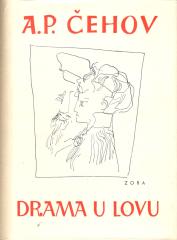
Sabrana djela A. P. Čehova #3: Drama u lovu i druge novele

Sabrana djela A. P. Čehova #3: Drama u lovu i druge novele

Anton Pavlovič Čehov

Treći svezak Sabranih djela sadrži najopsežniju Čehovljevu novelu „Drama u lovu“, te još niz dužih pripovjedaka iz razdoblja 1885-1886. Tu su humoreske poput Šilo u vreći, Eh, ta publika i Mnogo papira, kao i novele poput Uskličnik, Tuga i Anjuta.

Zora, 1959.
Kroatisch. Latein Schrift. Fester Einband mit Schutzumschlag.
8,74
Legenda o lijepom Pécopinu i lijepoj Bauldouri

Legenda o lijepom Pécopinu i lijepoj Bauldouri

Victor Hugo

A romantic story by Victor Hugo, the 21st letter from his travelogue "Le Rhin" ("The Rhine", 1842). A romantic classic, similar to the fairy tales of the Brothers Grimm or Andersen, but with Hugo's deep emotionality and philosophy of eternal love.

Zora, 1951.
Kroatisch. Latein Schrift. Taschenbuch.
3,34
Devojka i golubovi

Devojka i golubovi

Jaroslaw Iwaszkiewicz

Young Edek lives with his elderly father who tries to keep his son by his side. The boy's longing for freedom and a girl clashes with his father's possessiveness. The pigeons symbolize unattainable freedom. The conflict leads to a tragic ending.

Svjetlost, 1965.
Serbisch. Latein Schrift. Taschenbuch.
2,14
Sikamora

Sikamora

Goran Samardžić

"Sikamura" is a collection that does not offer clear answers, but rather encourages the reader to interpret and reflect, making it demanding but significant in the context of contemporary literature.

Bosanska knjiga, 1997.
Kroatisch. Latein Schrift. Taschenbuch.
5,98