Voće tela

Voće tela

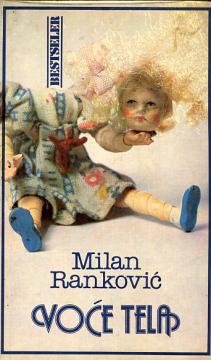
Milan Ranković

"Fruits of the Body" (1983) is a novel by Milan Ranković that explores physicality as a source of pleasure, suffering and social interaction in the context of Yugoslav socialism. The novel remains an under-read gem of Yugoslav prose in the 1980s.

The main character, a middle-aged intellectual and aesthetician like the author himself, leads us through an introspective search for the meaning of physical existence. Through a series of fragments and monologues, Ranković examines the "fruits of the body" – metaphorically the fruits of bodily experiences: love affairs, parenthood, illness and artistic inspiration.

The plot, structured in a labyrinth, moves between Belgrade and Zagreb, where the protagonist encounters former lovers, colleagues and anonymous encounters that reveal the contrasts between the idealized aesthetics of the body in art and the harsh reality of everyday life. In one key segment, the character is confronted by a young artist who accuses him of compromising with the body in favor of ideology, triggering a deep self-reflection on sexuality as resistance to the system.

The novel emphasizes Ranković's background as an art theorist – influences from Kafka to Barthes – criticizing the repression of the body under socialism and celebrating its sensuality. The style is fragmentary, poetic, full of allegories (the body as a garden, the fruit as sin and reward), with doses of humor and irony towards bureaucratic Yugoslavia. As part of Ranković's late phase, the work connects his earlier essays on aesthetics with fiction, leaving the reader with the question: is the body the fruit or the burden of freedom?

Urednik
Zdravko Židovec
Naslovnica
Nenad Dogan
Dimenzije
20 x 15 cm
Broj strana
218
Izdavač
August Cesarec, Zagreb, 1983.
 
Latinica. Tvrde korice s omotom.
Jezik: Hrvatski.

Dva primerka su u ponudi

Primerak broj 1

Stanje:Korišćeno, u odličnom stanju
Dodato u korpu!

Primerak broj 2

Stanje:Korišćeno, u odličnom stanju
Dodato u korpu!
 

Zanima Vas i neka druga knjiga? Možete pretražiti našu ponudu pomoću pretrage ili prelistati knjige po kategorijama.

Možda će Vas zanimati i ovi naslovi

Krčma

Krčma

Julian Stryjkowski

Knjiga Julijana Strijkovskog „Svratište“, objavljena 1977. godine, istražuje život u malom jevrejskom selu u Galiciji tokom 19. veka.

BIGZ, 1977.
Srpski. Latinica. Broširano.
4,38
Bilješka o piscu: Neljubavni roman

Bilješka o piscu: Neljubavni roman

Julijana Matanović

Bilješka o piscu prvi je bestseler omiljene hrvatske autorke Julijane Matanović. Roman, hit od objavljivanja, podseća nas da se prošlost ne može izbrisati, već samo razumeti.

Mozaik knjiga, 2002.
Hrvatski. Latinica. Broširano.
6,38
Deobe

Deobe

Dobrica Ćosić

Deobe je roman o tragičnoj podeli Srba na četnike i partizane tokom Drugog svetskog rata. Dobitnik NIN-ove nagrade, deo je šire epske trilogije, inspirisane Ćosićevim iskustvima i istorijskim dokumentima.

Prosveta, 1963.
Hrvatski. Latinica. Tvrde korice s omotom.
13,74
Klatno

Klatno

György Konrád

Klatno iscrtava unutarnju mapu pustolovine samorazotkrivanja - vlastitih sklonosti, strahova, želja, Ijubavi - vlastitog habitusa, otkrivajući uz to, kao nikad do sada, i tajne piščeve radionice.

Kulturni centar Novog Sada, 2010.
Srpski. Latinica. Broširano.
6,24
Deobe 1-3

Deobe 1-3

Dobrica Ćosić

Ovo djelo, nagrađeno NIN-ovom nagradom za tu godinu, smatra se jednim od najznačajnijih u srpskoj književnosti nakon Drugog svjetskog rata. Prvo izdanje.

Prosveta, 1961.
Srpski. Ćirilica. Tvrde korice s omotom.
Knjiga se sastoji od tri toma
11,42
Aurorin poticaj

Aurorin poticaj

Erich Hackl

The work is based on a true event that occurred in Spain in 1933: Aurora Rodriguez killed her daughter Hildegart, a famous fighter for women's emancipation and a cult figure on the political scene of the time.

Mladost, 1990.
Hrvatski. Latinica. Tvrde korice s omotom.
4,96 - 4,98