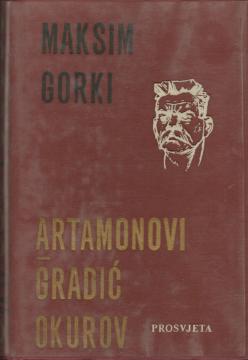
Artamonovi / Gradić Okurov
Der 1925 erschienene Roman „Artamonovi“ ist eines der bedeutendsten Werke Maxim Gorkis. Die Geschichte „Gradić Okurov“ ist ein kurzer Roman oder eine Novelle, die Gorki im Jahr 1909 schrieb.
Der Roman Artamonovi folgt drei Generationen der Familie Artamonov und zeigt den Aufstieg und Fall der Familie im Kontext der gesellschaftlichen Veränderungen in Russland.
Die Geschichte beginnt mit dem ersten Familienmitglied, Iljo Artamonov, einem ehemaligen Bauern, der sein Heimatdorf verlässt und in einer kleinen Provinzstadt eine kleine Textilfabrik gründet. Ilja ist ehrgeizig und fleißig und schafft es, Reichtum und Ansehen zu erlangen. Sein Erfolg basiert auf der Ausbeutung der Arbeiter und dem festen Glauben an die eigenen Fähigkeiten.
Die nächste Generation, angeführt von seinen Söhnen, übernimmt das Unternehmen, doch ihre Haltung gegenüber den Arbeitern und der Arbeit wird immer kalter und gefühlloser. Allmählich verliert die Familie den Bezug zur Realität und wird zum Symbol der Dekadenz des Bürgertums. Die Arbeiter beginnen, ihre Rechte einzufordern, und die Fabrik wird zum Schauplatz des Konflikts zwischen den Eigentümern und der Arbeiterklasse.
Die dritte Generation der Artamons steht vor dem völligen Zerfall von Familie und Unternehmen. Aufgrund der gesellschaftlichen und politischen Veränderungen in Russland, einschließlich der bevorstehenden Revolution, verliert die Familie alles, was die Generationen vor ihr geschaffen haben. Das Ende des Romans spiegelt den unaufhaltsamen Niedergang des Bürgertums angesichts des Ansturms historischer Veränderungen wider.
Das Werk Gradić Okurov schildert das Leben der kleinen Provinzstadt Okurov und ihrer Bewohner und konzentriert sich dabei auf die Monotonie, Stagnation und moralische Dekadenz der Gesellschaft.
Die Handlung findet in Okurovo statt, einer Kleinstadt, in der die sozialen Beziehungen eingefroren sind. Die Bewohner werden als desinteressiert an Veränderungen dargestellt, während die Stadt die Grauheit und Plackerei des Provinzlebens symbolisiert. Die Charaktere sind moralisch unentschlossen und unfähig, sich über ihren eigenen Alltag zu erheben. Jede Möglichkeit einer Veränderung stößt auf Widerstand und Apathie, was die soziale Trägheit der russischen Provinzen zeigt.
Die Hauptfiguren stehen oft vor inneren Konflikten zwischen ihrem Wunsch nach einem besseren Leben und der Realität, die sie zurückhält. Gorki nutzt die Kleinstadt meisterhaft als Mikrokosmos, um die Probleme der russischen Gesellschaft vor der Revolution darzustellen.
Im Angebot sind keine Exemplare vorhanden
Das letzte Exemplar wurde kürzlich verkauft.