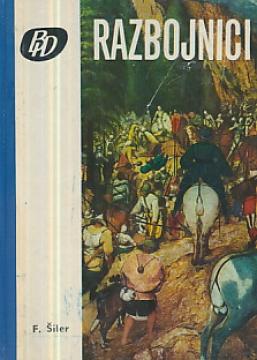
Razbojnici / Spletka i ljubav

Razbojnici / Spletka i ljubav

Friedrich Schiller

Two brothers, torn apart by the machinations of a younger, corrupt and deceitful creature, is a theme that is already familiar in the foundations of many literary works.

But from such an almost banal starting point, when the younger brother slanders the older brother in front of his father for banditry (and this is an ordinary student offense) and provokes his father's curse on his former favorite, Schiller will, in his further dramaturgical development, take powerful strokes of his sometimes difficult-to-tame pen towards portraying such characters whose titanic features will at times seem almost extraterrestrial.

Original title
Die rauber / Kabale und liebe
Translation
Alka Škiljan
Editor
Milica Grabovac
Dimensions
16.5 x 12 cm
Pages
280
Publisher
Svjetlost, Sarajevo, 1966.
 
Latin alphabet. Hardcover.
Language: Croatian.

One copy is available

Condition:Used, very good condition
Damages or inconvenience notice:
  • Slight damage to the cover
  • Traces of patina
 

Are you interested in another book? You can search the offer using our search engine or browse books by category.

You may also be interested in these titles

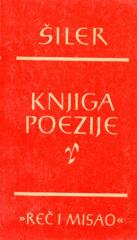
Knjiga poezije

Knjiga poezije

Friedrich Schiller
Izdavačko preduzeće "Rad", 1964.
Serbian. Latin alphabet. Paperback.
2.48 - 2.50
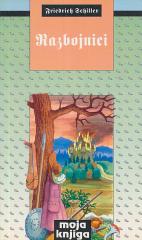
Razbojnici

Razbojnici

Friedrich Schiller

Two brothers, at odds with the plot of a younger, corrupt and deceitful creature, is a theme that is already known in the foundations of many literary works.

Školska knjiga, 1996.
Croatian. Latin alphabet. Paperback.
5.26
Razbojnici

Razbojnici

Friedrich Schiller

"The Robbers" (1781), Friedrich Schiller's first play, is a key work of the German Sturm und Drang movement, which explores themes of freedom, justice, moral conflict, and rebellion against social norms.

August Cesarec, 1987.
Croatian. Latin alphabet. Paperback.
3.36 - 3.48
Čiča Goriot

Čiča Goriot

Honore de Balzac

Uncle Goriot is one of the most famous and important novels by Honoré de Balzac, published in 1835. It is part of his vast cycle The Human Comedy (La Comédie humaine), and is considered perhaps the most successful work in that cycle.

Školska knjiga, 1974.
Croatian. Latin alphabet. Paperback.
4.36