Dragi kamen
Ein rares Buch

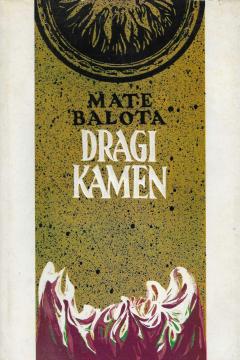
Dragi kamen

The only collection of poems by Mijo Mirković (pseudonym Mate Balota) in the Istrian Chakavian dialect – lyrics of the sea, stone, the suffering of the peasants, faith and love for Istria. The poems celebrate the sea and folk life, with a deep feeling for

Dear Stone is the only poetry collection by Mate Balota (Mija Mirković, 1898–1963), published in 1938 in Zagreb (Matica hrvatska), and later reissued several times (1947, 1972, 1988, accentuated editions in 2016 and 2023). The title comes from the poem of the same name from 1931, which symbolizes the precious, hard Istrian stone – a metaphor for the resilience, roots and beauty of one's native land.

The collection contains lyrics written in the Raklana (Istrian) Chakavian dialect – one of the most important contributions to the revival of Chakavian poetry in the 20th century. The poems are thematically divided into secular and religious motifs: love for Istria (stone, sea, olive trees, vineyards, the hard life of peasants and fishermen), social suffering (poverty, hunger, emigration), mother, faith (poems for Holy Week: Great Srida, Passion of the Lord, Good Friday, Easter Sunday), erotic and existential longing.

Balota writes simply, but deeply emotionally – he uses the vernacular, rhythm, repetitions and images from the everyday life of Istria. His poetry is not formalistic, but sincere, melancholic, sometimes pathetic, but always rooted in his homeland. Poems such as "Dear Stone", "Goat" (a social tragedy of an Istrian family), "Moja mati" or "Pramaliće" have become anthological and are often cited as examples of Chakavian lyrics.

The collection is crucial for Istrian and Croatian literature: it marked the continuity of Chakavian poetry after the 19th century (along with Mate Marjanović and others), influenced later authors (e.g. Chakavian Council, contemporary Istrian poets). Later editions often have pictorial contributions (drawings by Josip Diminić, photographs or illustrations that enhance the visual impression of the Istrian landscape – stone, sea, red soil).

The style is realistic, folk, with elements of romanticism and social lyricism – Balota, himself a hard worker, fisherman and sailor before his academic career, writes from authentic experience. Dear Stone remains a symbol of Istrian identity: "every sharp stone is dear to you" – love for a difficult but dear homeland. In Croatian literature, it is valued as the pinnacle of dialectal lyricism, with multiple reissues and musical adaptations.

Editor
Miroslav Sinčić, Mario Kalčić
Titelseite
Renato Percan
Maße
25 x 17 cm
Seitenzahl
112
Verlag
Matica hrvatska, Pula, 1972.
 
Latein Schrift. Fester Einband mit Schutzumschlag.
Sprache: Kroatisch.

Angeboten wird ein Exemplar

Zustand:Gebraucht, in ausgezeichnetem Zustand
Zum Warenkorb hinzugefügt!
 

Interessieren Sie sich für ein anderes Buch? Sie können das Angebot über unsere Suchmaschine suchen und finden oder Bücher nach Kategorien durchsuchen.

Diese Titel könnten Sie auch interessieren

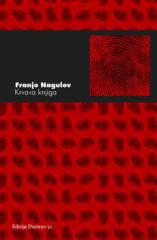
Krvava knjiga

Krvava knjiga

Franjo Nagulov

Franjo Nagulovs neuer Gedichtband „Das blutige Buch“ ist ein düsteres Zeugnis vom Niedergang einer Gesellschaft.

Durieux, 2024.
Kroatisch. Latein Schrift. Taschenbuch.
8,96
Crni zec (sabrane i nove pjesme)

Crni zec (sabrane i nove pjesme)

Drago Glamuzina

Naslovna pjesma “Crni zec” predstavlja svojevrsni simbolistički manevar unutar “stvarnosne” poezije, jer poput Baudelaireovog “Albatrosa”, posjeduje naglašen jednoznačni naboj.

Vuković & Runjić, 2022.
Kroatisch. Latein Schrift. Taschenbuch.
8,56 - 9,98
U meni lutanja

U meni lutanja

Jovanka Ivanka Komlen

Ovo je zbirka poezije koja istražuje unutarnji svijet žene, njezine osjećaje, identitet, potragu za smislom i mjesto u svijetu.

Vlastita naklada, 2010.
Kroatisch. Latein Schrift. Taschenbuch.
5,98
Muze i Erinije : Sabrane pjesme : 1977. - 2020.

Muze i Erinije : Sabrane pjesme : 1977. - 2020.

Mile Stojić

Writing in the first person singular, Stojić depicted the life and dreams, experience and fate, defeat and loss of homeland of a generation, a city, an era.

VBZ, 2021.
Kroatisch. Latein Schrift. Hardcover.
21,98
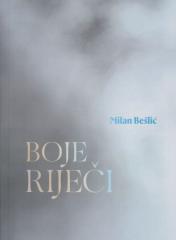
Boje riječi

Boje riječi

Milan Bešlić

"Bešlić's Colors of Words is a book of poetry that at its core preserves the idea of ​​the renewal of poetry; the idea of ​​its regeneration."

Društvo hrvatskih književnika, 2024.
Kroatisch. Latein Schrift. Taschenbuch.
6,18
Harikla

Harikla

Ana Jurišić

Es scheint, als sei in Ana Jurišićs Gedichtsammlung „Harikla“ alles geschehen, was hätte geschehen sollen und was nicht, doch die Folgen schließen Überraschungen und Unerwartetes nicht aus.

MeandarMedia, 2024.
Kroatisch. Latein Schrift. Taschenbuch mit Einband.
10,988,78