Antikvarne knjige
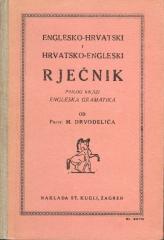
Englesko-hrvatski i hrvatsko-engleski rječnik: Prilog knjizi Engleska gramatika
The first edition of Milan Drvodelić's famous Dictionary from 1927 includes a bilingual dictionary that serves as a practical tool for learning English.
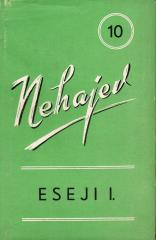
Eseji I.
Essays I. (1944) collects the author's significant studies on European classics: Tolstoy, Flaubert, Ibsen, Strindberg, Zola, Dostoevsky, and the essay "On Two Moralities." Profound modern critical-psychological essayism.
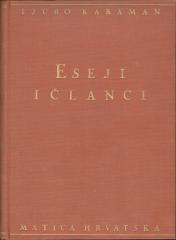
Eseji i članci
The collection Essays and Articles by Ljubo Karaman, an eminent art historian, includes a series of texts on Croatian art, with an emphasis on the medieval heritage of Dalmatia and its connection with European cultural movements.
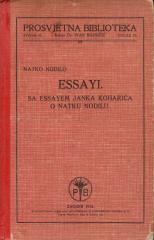
Essayi
The essays gather political, historical and cultural essays by Natko Nodil in which he discusses national identity, liberalism, religion and society, with an accompanying essay by Janko Koharić on the author's life and work.
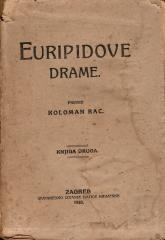
Euripidove drame: Knjiga druga
Der zweite Band der Tragödien des Euripides, übersetzt von Koloman Raca. Er enthält einige seiner berühmtesten und wirkungsvollsten Stücke, in denen der Autor die menschliche Psyche, die Leidenschaften und den Konflikt des Menschen mit Mythen und Schicksa
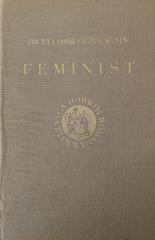
Feminist: roman iz nedavne prošlosti
A social novel with a thesis, which follows a young intelligent woman who fights for education, independence and equality in the conservative society of the 1920s, advocating for women's emancipation and financial independence.
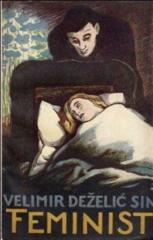
Feminist: roman iz nedavne prošlosti
Društveni roman sa tezom, koji prati mladu inteligentnu ženu koja se bori za obrazovanje, nezavisnost i jednakost u konzervativnom društvu 1920-ih, zalažući se za emancipaciju i finansijsku nezavisnost žena.
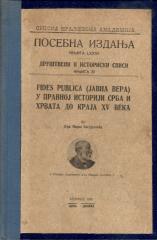
Fides publica (Javna vera) u pravnoj istoriji Srba i Hrvata do kraja XV veka
„Fides publica (Javna vera)“ (1930) je značajna pravno-istorijska studija Marka Kostrenčića o razvoju javnog kredibiliteta dokumenata, notarskih institucija i pravne sigurnosti u srednjovekovnim hrvatskim i srpskim zemljama.
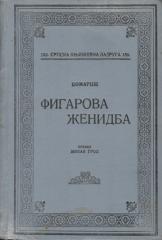
Figarova ženidba ili Ludi dan: Komedija u pet činova
Komedija „Figarova ženidba, ili Ludi dan“ (1784) je nastavak Seviljskog berberina. Figarova ženidba kritikuje društvene nepravde kroz ljubavne veze i intrige, slaveći Figarovu i Suzaninu domišljatost u borbi protiv aristokratske samovolje.
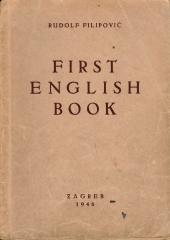
First English Book: Engleska početnica za I. razred gimnazije
Rudolf Filipovićs „First English Book“ (1946) ist ein englisches Lehrbuch für die erste Klasse der Sekundarstufe. Es war das erste systematische Englischlehrbuch im Nachkriegskroatien/Jugoslawien und sollte die Grundlagen der Grammatik, des Wortschatzes u