Meša Selimović
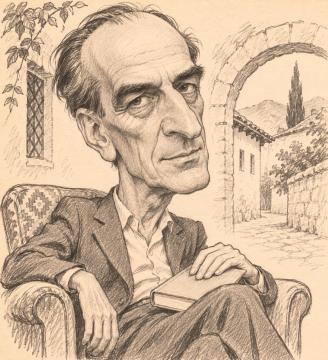
Meša Selimović (Tuzla, 26 April 1910 – Belgrade, 11 July 1982), born Mehmed Selimović, was a novelist, short-story writer and essayist, and a major figure in twentieth-century Bosnian and Serbian literature. He graduated from the University of Belgrade’s Faculty of Philosophy in 1934 and subsequently taught in Tuzla. During the Second World War he joined the Partisans. Afterwards, he worked in Sarajevo in education, theatre and publishing, including the publishing house Svjetlost.
His early collections, Prva četa (1950) and Tuđa zemlja (1957), draw on wartime experience and emphasise psychological characterisation. The novels Tišine (1961) and Magla i mjesečina (1965) increasingly explore inner conflict, loneliness and the difficult return to ordinary life.
His breakthrough came with Death and the Dervish (1966), which received the NIN Award. Through Ahmed Nurudin’s response to his brother’s arrest and death, the novel examines faith, conscience, fear and political authority. Ottoman Bosnia becomes the setting for a universal story about a man whose pursuit of justice exposes his own vulnerability and capacity to participate in oppression.
In The Fortress (1970), the returning soldier Ahmet Šabo struggles to preserve his dignity amid poverty, pressure and mistrust. Love and companionship offer a possible answer to the barriers separating individuals and communities. Later works include Ostrvo (1974), concerned with solitude and ageing, and the autobiographical Sjećanja (1976). His study Za i protiv Vuka (1967) considers language and literary tradition.
Selimović belonged to the academies of sciences and arts of Bosnia and Herzegovina and Serbia. His prose combines meditative rhythms, psychological insight and moral questions that resist easy answers. Historical settings illuminate enduring conflicts between freedom, security, love and power.