Émile Zola
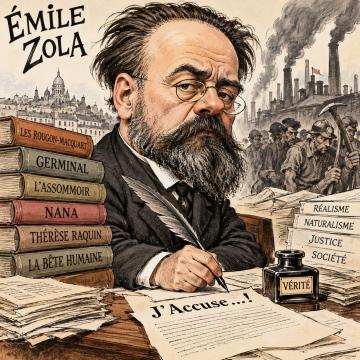
Émile Zola (Paris, April 2, 1840 – Paris, September 29, 1902) was a French writer, journalist, and literary critic, and one of the most significant representatives of naturalism in 19th-century European literature. He grew up in Aix-en-Provence, where he became friends with the painter Paul Cézanne. After his father's death, the family fell into financial hardship. Zola moved to Paris and took a job at the Hachette publishing house, subsequently dedicating himself to literature and journalism.
He began his literary career with the short story collection Stories for Ninon (1864) and attracted public attention with the novel Thérèse Raquin (1867). His most important achievement is the monumental Rougon-Macquart cycle (1871–1893), comprising twenty novels that depict French society during the Second Empire. Among the cycle's best-known works are L'Assommoir (1877), Nana (1880), The Ladies' Paradise (1883), Germinal (1885), The Beast Within (1890), and The Debacle (1892).
In his novels, Zola explored the influence of heredity, social environment, and life circumstances on human behavior. He devoted special attention to poverty, the working class, social injustices, and the moral hypocrisy of the bourgeoisie. He outlined the principles of naturalist poetics in his theoretical work The Experimental Novel (1880).
Following the Rougon-Macquart cycle, he wrote the Three Cities trilogy (1894–1898) and began the Four Gospels cycle. As a socially engaged intellectual, he gained renown for his open letter J’accuse…! (1898), in which he defended the unjustly convicted Alfred Dreyfus and condemned antisemitism. Due to this stance, he was forced to leave France temporarily.
He died in Paris from carbon monoxide poisoning under unexplained circumstances. His remains were transferred to the Panthéon in Paris in 1908. Zola left an indelible mark on world literature by combining the artistic power of the novel with a critical observation of society.
Titles in our offer
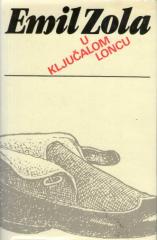
U ključalom loncu
The main character, Jean Makar, is a poor laborer who works on the Paris railway. Through his story, the novel explores the themes of social inequality, the struggle for survival and the influence of the environment on the individual.
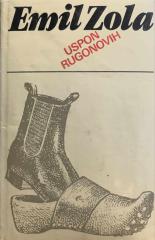
Uspon Rugonovih
Der Roman befasst sich mit dem Wesen und der sozialen Geschichte einer Familie während des Zweiten Kaiserreichs. Die Hauptfiguren sind Mitglieder der Familien Rugon und Makari und die Handlung spielt in Frankreich.
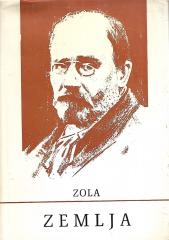
Zemlja
„Das Land“ ist ein 1887 erschienener Gesellschaftsroman aus dem „Rougon-Macquart“-Zyklus, in dem Zola die brutale Realität des Lebens unter französischen Bauern schildert.
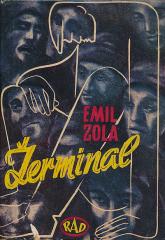
Žerminal
In seinem besten Werk „Germinal“ beschrieb Émile Zola realistisch die unmenschlichen Lebens- und Arbeitsbedingungen der Bergleute im Norden Frankreichs in den 60er Jahren des 18. Jahrhunderts.
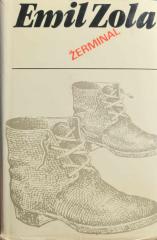
Žerminal
In seinem besten Werk „Germinal“ beschrieb Émile Zola realistisch die unmenschlichen Lebens- und Arbeitsbedingungen der Bergleute im Norden Frankreichs in den 60er Jahren des 19. Jahrhunderts.
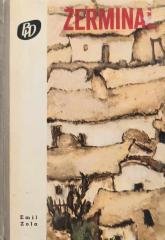
Žerminal
In seinem besten Werk „Germinal“ beschrieb Émile Zola realistisch die unmenschlichen Lebens- und Arbeitsbedingungen der Bergleute im Norden Frankreichs in den 60er Jahren des 19. Jahrhunderts.
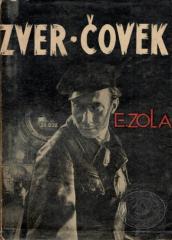
Zver-čovek
Roman istražuje destruktivne sile nasljeđa, strasti i nasilja u modernom industrijskom društvu. Radnja se odvija uglavnom na željeznici, simbolu brzine, sudbine i neizbježne propasti. “Čovjek zvijer” je prvi opis zločina u industrijskom svijetu.