Fjodor M. Dostojevski
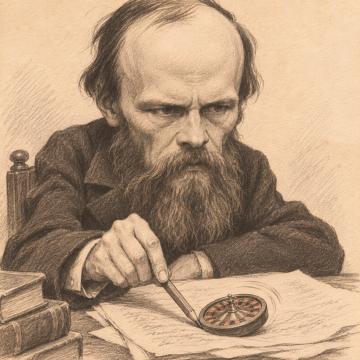
Fyodor Mikhailovich Dostoevsky (Moscow, 1821 – St Petersburg, 1881) reveals the murderer early in Crime and Punishment (1866). The tension builds from what follows. Raskolnikov tries to defend the theory he used to justify the crime, while every conversation with the investigator Porfiry and every meeting with Sonya forces him to face what he has done.
Dostoevsky graduated from a military engineering school in St Petersburg and made his literary reputation with Poor Folk (1846), a novel in letters. Arrested in 1849 for his involvement in the Petrashevsky Circle, he was sentenced to death. He was told that the sentence had been commuted only at the place of execution. He spent four years at hard labour in Omsk and then served as a soldier in Siberia. His prison experience became the material for Notes from the House of the Dead (1860–1862).
In Notes from Underground (1864), the narrator quarrels with an imagined reader and contradicts himself. His voice raises the question of how much people value the freedom to act even against their own interests. In The Gambler (1866), that impulse towards self-sabotage plays out at the roulette table. Working against a contractual deadline, Dostoevsky dictated the novel to the stenographer Anna Snitkina, his future wife.
In The Idiot (1868–1869), Prince Myshkin tries to act with compassion among people who take his sincerity for weakness. In Demons (1871–1872), a small revolutionary group uses political ideas to bind its members to one another. In both novels, the clash of ideas unfolds through what the characters say and do, often during an awkward visit or in the middle of a public scandal.
His final novel, The Brothers Karamazov (1879–1880), grows out of a father’s murder and his son’s trial. Ivan’s story of the Grand Inquisitor brings a question into the family drama: how much freedom are people willing to give up in exchange for security? From a poor clerk’s letters to the Karamazov brothers’ arguments, Dostoevsky gives his characters room to voice even the most uncomfortable reasons for what they believe.
Titles in our offer
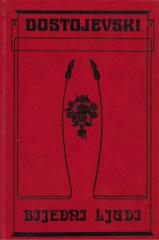
Bijedni ljudi / Dvojnik / Roman u devet pisama / Gospodin Proharčin / Gazdarica / Polzunkov / Slabo srce / Pošteni lopov / Božićno drvce i svadba / Tuđa žena i muž pod posteljom
The early works demonstrate Dostoevsky's interest in psychology, social criticism, and moral dilemmas, laying the foundation for later masterpieces. At the end of the book, an appendix by Leonid Grossman: The most important dates in the life and work of F
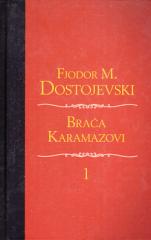
Braća Karamazovi
The Brothers Karamazov is the last novel of the Russian genius Fyodor Mikhailovich Dostoyevsky, which he completed less than three months before his death.
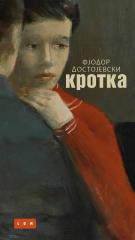
Pisma iz progonstva / Zimske beleške o letnjim utiscima / Krotka
Fyodor Dostoevsky, one of the greatest writers and visionaries in history, is presented in this edition with a selection from his correspondence (Letters from Exile), an account of his first trip to Europe (Winter Notes on Summer Impressions), and the fam
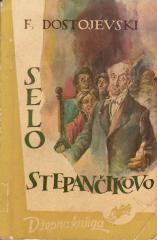
Selo Stepančikovo
„Selo Stepančikovo“ je humoristički roman Dostojevskog, prvi put objavljen 1859. godine. Ovaj roman, koji se razlikuje od kasnijih, mračnijih autorovih dela, predstavlja satiričnu kritiku društvenih odnosa i ljudskih slabosti.
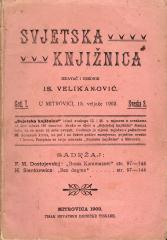
Svjetska knjižnica, Sv. 3.
Svetska biblioteka, tom 3, koju je priredio i objavio Iso Velikanović, sadrži odlomke iz dela „Braća Karamazovi“ F. M. Dostojevskog i „Bez dogme“ H. Sjenkeviča. Namenjena je za samostalno povezivanje pojedinačnih dela.
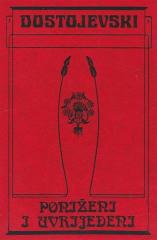
Ujakov san / Poniženi i uvrijeđeni
Dva lica Dostojevskog: satira o udaji iz interesa i potresan roman o ljubavi, porodičnim sukobima i poniženju. Intrige provincije i patnje peterburške sirotinje povezuje pitanje ljudskog dostojanstva.

Život za milijune
Antologija iz 2010. godine, „Život za milione: Najbolje priče za razonodu”, okuplja izvrsne kratke priče velikih stranih i domaćih autora, među kojima su Matoš, Bokačo, Radaković i Dostojevski.
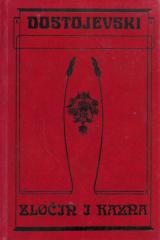
Zločin i kazna
Roman „Zločin i kazna“ (1866) Fjodora Mihailoviča Dostojevskog, remek-delo svetske književnosti, predstavlja duboko psihološko i filozofsko istraživanje krivice, morala i iskupljenja.