Milutin Cihlar Nehajev
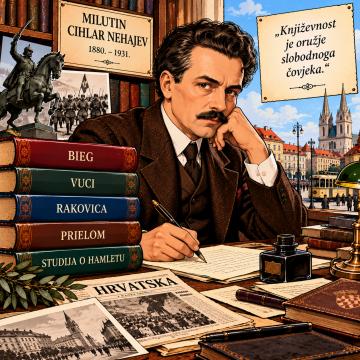
Milutin Cihlar Nehajev (Senj, 25 November 1880 – Zagreb, 7 April 1931) was a Croatian writer, novelist, short story writer, playwright, essayist, literary and theatre critic, journalist and translator. He is one of the most significant representatives of Croatian literary modernity and versatile intellectuals of his time.
He was born into a Senj bourgeois family of Czech-Croatian roots (his father Sebald Cihlar immigrated from the Czech Republic). He finished elementary school in Senj and high school in Zagreb. He studied chemistry in Vienna, and in 1903 received a doctorate in philosophy. After his studies, he worked as a professor in Zadar, where in 1905 he started the newspaper Lovor. He lived and worked in Trieste (editor of the newspaper Balkan), Križevci (assistant at the Agricultural and Chemical Institute), and from 1912 permanently in Zagreb. He was a long-time collaborator and editor of leading newspapers (Obzor, Jutarnji list, Agramer Tagblatt) and a correspondent from Paris, Prague and Belgrade. In 1926 he was elected president of the Croatian Writers' Association.
Nehajev belonged to the generation of Croatian modernity. His work is characterized by deep psychological analysis, modernist sensibility, subtle irony and motifs of the decline of a sensitive intellectual personality, escape from reality, loneliness, the conflict of ideals and rude society and generational ruptures. He particularly stood out as an excellent theatre and music critic.
Nehajev was an engaged intellectual with pronounced national views. He supported Croatian state-building thought, rightism and the ideas of Eugen Kvaternik and Ante Starčević. He wrote about Croatian political figures (Ivan Mažuranić, Eugen Kvaternik) and national themes (the centenary of the Croatian National Revival). Although he was close to progressive circles in his youth, his political views were complex and sometimes contradictory – for example, his collaboration with unionist newspapers caused controversy. He always emphasized Croatian national identity and criticized foreign influences.
Most important works:
- Novels: Bijeg (1915, often considered the best novel of Croatian modernity), Vuci (1928, historical novel about Krsto Frankopan)
- Short stories and novels: Polonaze, Veliki grad, Zeleno more, Kostrenka, etc.
- Dramas: Prielom, Svjećica, Klupa na mješečini
- Essays: Study on Hamlet (1917), Rakovica (on the Rakovica Rebellion and Kvaternik), numerous studies on Tolstoy, Dostoevsky, Ibsen, Flaubert, Strindberg, Zola, Šenoa, Gjalski, Leskovar, Nazor, etc.
In 1944 and 1945 (published by the Croatian Publishing Bibliographic Institute), 10 volumes of the collected works of Milutin Nehajev. Due to war and post-war circumstances, planned additional volumes were not published, so the collected works remain incomplete.
Nehajev died at the age of 50. Although he was not as popular with the public as some of his contemporaries, his prose, dramas and essays have a high artistic value and a strong influence on the development of modern Croatian literature. Today, his works are rediscovered as relevant due to their psychological depth, modern approach and rich intellectual heritage.
Titles in our offer
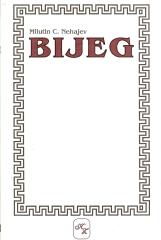
Bijeg
A psychological novel about the downfall of the gifted intellectual Đuro Andrijašević, who flees from reality but finds no salvation in either the city or the province. A classic of Croatian modernism (1909).
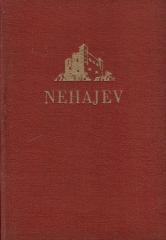
Drame
The third volume of Milutin Nehajev's collected works brings together his plays that trace the author's development from youthful enthusiasm to mature introspection: Prielom, Svjećica, Život, Spasitelj and Klupa na mješečini.
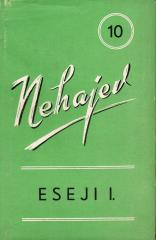
Eseji I.
Essays I. (1944) collects the author's significant studies on European classics: Tolstoy, Flaubert, Ibsen, Strindberg, Zola, Dostoevsky, and the essay "On Two Moralities." Profound modern critical-psychological essayism.
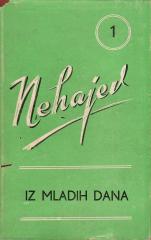
Iz mladih dana
"From the Days of Youth" (1944) is the first volume of Milutin Nehajev's Works. It includes poems, short stories and sketches, literary articles and a theater chronicle from his early years. A rare edition in its original wrapper.
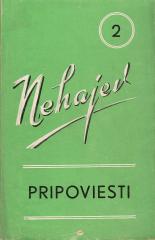
Pripoviesti
"Pripoviesti" (1944) presents Nekhajev's short stories in the order in which they appeared, and in this edition they are collected for the first time in one book. A rare wartime edition in the original cover.
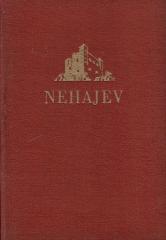
Rakovica
"Rakovica" is a fictionalized historical and political monograph about the Rakovica Uprising of 1871 and Eugen Kvaternik. An unfinished posthumous work with a profound psychological and national portrait of the Croatian politician and the uprising.
Rakovica: o 60. godišnjici smrti Eugena Kvaternika
Nehajev's "Rakovica", in the edition edited by Blaž Jurišić, presents the Rakovica Rebellion, its causes and ideas. Nehajev did not finish the book due to his sudden death; it was completed and edited by Blaž Jurišić.
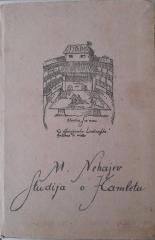
Studija o Hamletu
A Study of Hamlet (1917) is a psychological-critical analysis of Shakespeare's masterpiece. Nehajev interprets the character of Hamlet as a modern intellectual – passive, ill-willed, cynical and fatalistic, faced with a corrupt world.
Studije i članci I.
Studies and Articles I. (1944) contains a selection of the author's most important literary studies and essays on Janko Leskovar, August Šenoa, Gjalski, Eugen Kvaternik, Milan Ogrizović and Croatian theatre. A mature critical and essayistic edition.
Studije i članci II.
The book contains the author's important essays on Ivan Mažuranić (Chancellor and Ban), Vladimir Mažuranić, and the centenary of the Croatian National Revival. A significant national-critical and historical-essay publication.