Milutin Cihlar Nehajev
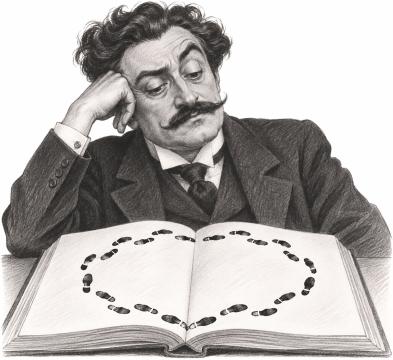
Đuro Andrijašević wants to write, to love and to live on his own terms, but every delay leaves him with fewer choices. From these seemingly minor retreats, Milutin Cihlar Nehajev (1880–1931) built Bijeg (1909), a major novel of Croatian modernism. Its subtitle, Povijest jednog našeg čovjeka (“The Story of One of Our Own”), suggests how much of his generation’s experience he recognised in Đuro’s fate.
Born in Senj, Nehajev earned a doctorate in chemistry in Vienna in 1903. He taught at a secondary school in Zadar and worked at the Agricultural College in Križevci while building a career in literature and journalism. He founded the journal Lovor in 1905, wrote for Obzor and Jutarnji list, and reported from Paris, Belgrade and Prague. In 1926 he was elected president of the Croatian Writers’ Association. He died in Zagreb.
His interest in the inner lives of his characters is already apparent in the novella Veliki grad (1902). In Bijeg, Đuro’s thoughts, memories and doubts repeatedly interrupt the action. The reader sees how much energy he spends imagining another life and how difficult it is for him to take the first step towards it.
In the historical novel Vuci (1928), Nehajev turns to the sixteenth century. At its centre is Krsto Frankopan, whose decisions carry weight amid conflicts among the nobility and struggles for power. The novel was preceded by Frankopani, a study published in Jutarnji list in 1927. Alongside fiction, Nehajev wrote plays, theatre criticism and literary essays. The posthumous Knjiga eseja (1936) includes pieces on Tolstoy, Flaubert and Ibsen, as well as a study of Hamlet.
Titles in our offer
Bijeg
A psychological novel about the downfall of the gifted intellectual Đuro Andrijašević, who flees from reality but finds no salvation in either the city or the province. A classic of Croatian modernism (1909).
Drame
The third volume of Milutin Nehajev's collected works brings together his plays that trace the author's development from youthful enthusiasm to mature introspection: Prielom, Svjećica, Život, Spasitelj and Klupa na mješečini.
Eseji I.
Essays I. (1944) collects the author's significant studies on European classics: Tolstoy, Flaubert, Ibsen, Strindberg, Zola, Dostoevsky, and the essay "On Two Moralities." Profound modern critical-psychological essayism.

Iz mladih dana
"From the Days of Youth" (1944) is the first volume of Milutin Nehajev's Works. It includes poems, short stories and sketches, literary articles and a theater chronicle from his early years. A rare edition in its original wrapper.
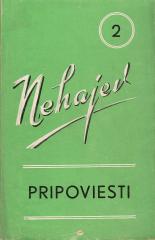
Pripoviesti
"Pripoviesti" (1944) presents Nekhajev's short stories in the order in which they appeared, and in this edition they are collected for the first time in one book. A rare wartime edition in the original cover.
Rakovica
"Rakovica" is a fictionalized historical and political monograph about the Rakovica Uprising of 1871 and Eugen Kvaternik. An unfinished posthumous work with a profound psychological and national portrait of the Croatian politician and the uprising.
Rakovica: o 60. godišnjici smrti Eugena Kvaternika
Nehajev's "Rakovica", in the edition edited by Blaž Jurišić, presents the Rakovica Rebellion, its causes and ideas. Nehajev did not finish the book due to his sudden death; it was completed and edited by Blaž Jurišić.
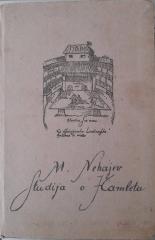
Studija o Hamletu
A Study of Hamlet (1917) is a psychological-critical analysis of Shakespeare's masterpiece. Nehajev interprets the character of Hamlet as a modern intellectual – passive, ill-willed, cynical and fatalistic, faced with a corrupt world.
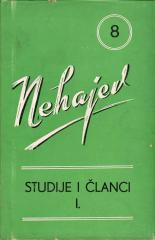
Studije i članci I.
Studies and Articles I. (1944) contains a selection of the author's most important literary studies and essays on Janko Leskovar, August Šenoa, Gjalski, Eugen Kvaternik, Milan Ogrizović and Croatian theatre. A mature critical and essayistic edition.
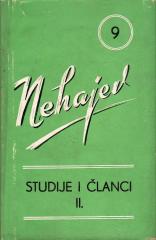
Studije i članci II.
The book contains the author's important essays on Ivan Mažuranić (Chancellor and Ban), Vladimir Mažuranić, and the centenary of the Croatian National Revival. A significant national-critical and historical-essay publication.