Rainer Maria Rilke
Rainer Maria Rilke (Prague, 1875 - Valmont in Switzerland, 1926) is one of the most important poets in the German language and one of the key figures of European modernism. He was born René Karl Wilhelm Johann Josef Maria Rilke into a bourgeois family in the then Austro-Hungarian Monarchy. After his education in military institutes, which he found difficult, he turned to literature, studied in Prague, Munich and Berlin and became involved in the intellectual and artistic circles of his time at an early age. The name René was later replaced by the name Rainer, which is often associated with the influence of Lou Andreas-Salomé, one of the decisive figures in his life.
Rilke's literary development includes poetry, lyrical prose, shorter prose forms, essays and extensive correspondence. In his early phase, he wrote under the influence of symbolism and Art Nouveau sensibility, and among the works that brought him wide recognition, Die Weise von Liebe und Tod des Cornets Christoph Rilke stands out. Travels to Russia at the end of the 19th century, encounters with artists and strong spiritual experiences profoundly influenced his poetics, especially his relationship to religiosity, inner life and the image of man in the world.
Among his most important works are the collection of poems Das Stunden-Buch, the book of poems Das Buch der Bilder, the novel Die Aufzeichnungen des Malte Laurids Brigge, the cycle Neue Gedichte, Duineser Elegien and Die Sonette an Orpheus. In them, Rilke develops a distinctive poetic language marked by high sensitivity, depth of thought, dense images and a lasting interest in the themes of solitude, love, art, death, transformation and the limits of human experience. His relationship to the visual arts is particularly important, visible also in his connections with Auguste Rodin, about whom he wrote.
Rilke is an author whose oeuvre connects the transition from the late 19th to the high modernism of the 20th century. He wrote in German, but lived a distinctly European life, between Prague, Paris, Munich, Duino, Switzerland, and other cultural centers. His works have been translated into numerous languages and are permanently present in the world canon. Rilke is remembered as a poet of inner tension and spiritual sophistication, and his work still occupies a central place in the history of modern literature.
Titles in our offer
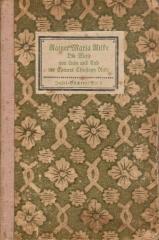
Die Weise von Liebe und Tod des Cornets Christoph Rilke
The antiquarian edition of Rilke's early work Die Weise von Liebe und Tod des Cornets Christoph Rilke brings poetic prose about love, war and death and is of particular value to collectors of early editions.
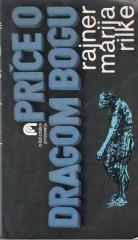
Priče o dragom Bogu
Rilke's Tales of a Dear God features a series of lyrical prose pieces about faith, childhood, and poverty, and occupy an important place in his early phase, in the transition from symbolism to more mature poetics.
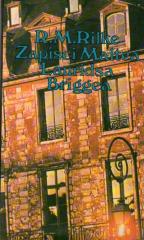
Zapisci Maltea Lauridsa Briggea
Rainer Maria Rilke's The Notebooks of Malte Laurids Brigge (1910), his only novel, is an introspective and poetic account of the inner turmoil of a young Danish nobleman, Malte Laurids Brigge, in Paris.
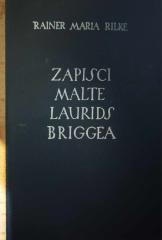
Zapisci Malte Laurids Briggea
Rainer Maria Rilke's The Notebooks of Malte Laurids Brigge (1910), his only novel, is an introspective and poetic account of the inner turmoil of a young Danish nobleman, Malte Laurids Brigge, in Paris.