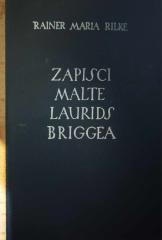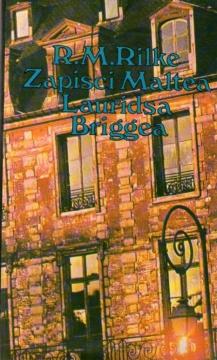
Zapisci Maltea Lauridsa Briggea

Zapisci Maltea Lauridsa Briggea

Rainer Maria Rilke

Rainer Maria Rilke's The Notebooks of Malte Laurids Brigge (1910), his only novel, is an introspective and poetic account of the inner turmoil of a young Danish nobleman, Malte Laurids Brigge, in Paris.

Written in the form of diary entries, the novel explores themes of existential anxiety, mortality, art, and the loss of identity in the modern world.

Malte, a 28-year-old poet, comes to Paris seeking inspiration, but is confronted with feelings of alienation and fear. The city, noisy and chaotic, intensifies his inner insecurity. Through fragmented thoughts, memories of his childhood in Denmark, and reflections on the history of his aristocratic family, Malte contemplates the transience of life and the impossibility of finding meaning. He encounters the poor, the sick, and the outcast, which leads him to contemplate suffering and death. His notes intertwine reality, dreams, and philosophical reflections, creating a layered picture of a man struggling with his own existence.

The novel has no classical plot, but is a mosaic of impressions, symbols, and lyrical passages. Malte’s obsession with the past and fear of the future reflect Rilke’s own search for spiritual and artistic answers. The work, situated between realism and modernism, influenced existentialist literature, and its introspective depth makes it a universal exploration of the human soul and the artistic calling.

Original title
Die aufzeichnungen des Malte Laurids Bigge
Translation
Oto Šolc
Editor
Milan Mirić
Graphics design
Alfred Pal
Dimensions
21 x 12.3 cm
Pages
223
Publisher
Sveučilišna naklada Liber (SNL), Zagreb, 1979.
 
Latin alphabet. Hardcover with dust jacket.
Language: Croatian.

One copy is available

Condition:Used, excellent condition
 

Are you interested in another book? You can search the offer using our search engine or browse books by category.

You may also be interested in these titles

Zapisci Matea Laurdisa Briggea

Zapisci Matea Laurdisa Briggea

Rainer Maria Rilke
Jutarnji list, 2008.
Croatian. Latin alphabet. Paperback.
7.805.85
Priče o dragom Bogu

Priče o dragom Bogu

Rainer Maria Rilke
Prosveta, 1988.
Serbian. Latin alphabet. Paperback.
4.74
Proces

Proces

Franz Kafka

Kafka wrote The Process between 1914 and 1915, published posthumously in 1925. The novel is unfinished but with an added final chapter by Max Brod. Edition with a foreword by B. Živojinović and an afterword by Walter Killi.

BIGZ, 1990.
Serbian. Latin alphabet. Paperback.
4.26
Ulazeći u Varcar

Ulazeći u Varcar

Ivan Lovrenović

The hybrid book – a novel, poem and essay in one – is a dedication to his native Varcar, a small village in central Bosnia, where the author's roots intertwine with the history, myth and chaos of the 20th century.

Fraktura, 2016.
Croatian. Latin alphabet. Hardcover with dust jacket.
14.42
Stotina godina (antikronika)

Stotina godina (antikronika)

Dario Harjaček

The novel One Hundred Years by Dario Harjaček provides a panoramic view of Trešnjevka and its inhabitants through a century of changes, ideologies, and human destinies – a mosaic of Zagreb in which life, art, and history intertwine.

Oceanmore, 2025.
Croatian. Latin alphabet. Paperback.
13.42
Zagrepčanka

Zagrepčanka

Branislav Glumac

Branislav Glumac published a novel without periods or commas in 1974, as the relentless stream of thought of a young rebel. Published in socialist Yugoslavia, the work caused a scandal with its openness and became a classic about generational rebellion.

IROS, 1986.
Croatian. Latin alphabet. Hardcover.
8.22 - 8.24