Henry Miller

Henry Miller (1891–1980) called his novel Tropic of Cancer and gave his narrator the freedom to move sideways. He starts describing lunch in Paris, remembers a friend he owes money to, and by the end of the paragraph is discussing the collapse of civilisation. Lunch, if there is any, will have to wait.
Born in New York and raised in Brooklyn, Miller worked at various jobs before he could live by writing, including a stint at Western Union. In 1930 he moved to Paris, where money was scarce and he met the writer Anaïs Nin, who supported his work. Tropic of Cancer was published there in 1934. Cheap rooms, cafés and conversations among people who have no idea what they’ll live on next week became the material for a novel in which autobiography, fiction and essay mingle freely.
In Black Spring (1936), the Parisian present keeps giving way to memories of Brooklyn. Tropic of Capricorn (1939) returns to Miller’s American years and his time at the telegraph company. He wrote openly about sex, with little regard for what could then make it into print. When Tropic of Cancer was published in the United States in 1961, court cases followed. A 1964 ruling by the US Supreme Court protected the book. The argument over what counted as decent lasted longer than quite a few of the friendships Miller describes.
A trip through Greece inspired The Colossus of Maroussi (1941), a travel book in which portraits of people keep taking the place usually reserved for the sights. Miller later settled in California, lived for years in Big Sur and painted watercolours. In The Rosy Crucifixion, the trilogy consisting of Sexus (1949), Plexus (1953) and Nexus (1960), he returned to his own life, his marriage and the years he spent trying to become a writer. Readers soon get used to Miller’s detours. Sometimes it takes a few more pages to realise that what looked like a digression was the reason for telling the story in the first place.
Titles in our offer
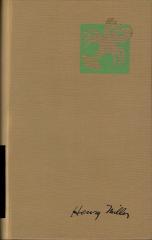
Crno proljeće / Svijet seksa
Black Spring is a collection of essays and short stories by the American writer Henry Miller, which was first published in 1936. "The World of Sex" is Miller's second well-known work, which is particularly controversial due to its explicit content.

Cvet Henrija Milera
Knjiga Cvet Henrija Milera zasnovana je na izboru najboljih i najatraktivnijih dela ovog pisca, prateći hronološki niz u Milerovom pisanju, dajući Milerove umetnički najzrelije stranice.
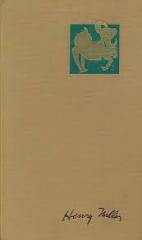
Jarčeva obratnica
Jarčeva obratnica je još jedan legendarni erotski roman Henrija Milera, objavljen 1938. godine. Zbog ubačene filozofije, donekle je teško razumeti. U ovom radu Henri je u Parizu, ali se zapravo seća detinjstva u Njujorku.

Jarčeva obratnica
Jarčeva obratnica je još jedan legendarni erotski roman Henrija Milera, objavljen 1938. godine. Zbog ubačene filozofije, donekle je teško razumeti. U ovom radu Henri je u Parizu, ali se zapravo seća detinjstva u Njujorku.
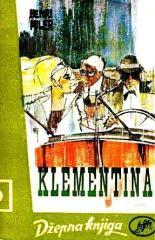
Klementina
Miller, known for his provocative and autobiographical prose, describes in Clementine the bohemian life in Paris in the 1930s, filled with sexual adventures, artistic pursuits, and free-spirited philosophy.

Mirni dani na Clichyju
An autobiographical novella written in 1940 (later revised), set in the early 1930s in the Parisian suburb of Clichy. The work is a nostalgic, sensual, and vivid depiction of the bohemian life of a poor American immigrant in Paris.

Mirni dani na Klišiju
In this novel, the author's enthusiasm for life is boundless and he conveys it in the way that is characteristic of him, by describing pure pleasure in women, wine, food, ambience and atmosphere.

Odabrana djela Henryja Millera
The six-volume set The Selected Works of Henry Miller brings together key novels and essays by this celebrated author, including the Rosy Crucifixion trilogy and the controversial Tropic of Cancer.
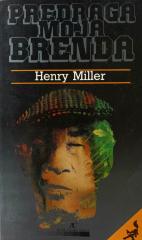
Predraga moja Brenda
Henry Millers Liebesbriefe an Brenda Venus. Wenn Sie Millers pure Leidenschaft in einem zärtlichen Epilog suchen, ist dies ein emotionaler Einblick in das Herz einer Rebellin – berührend, witzig und fesselnd.

Rakova obratnica
Das ist eine Anschuldigung, eine Verleumdung, eine persönliche Beleidigung. Dies ist kein Buch im üblichen Sinne des Wortes. Nein, das ist eine ständige Beleidigung, eine Spucke ins Gesicht der Kunst, ein Tritt in den Wind gegen Gott, den Menschen, das S