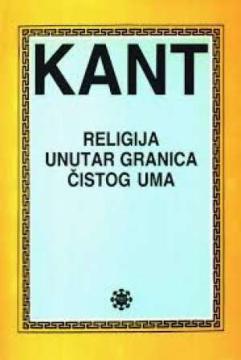
Religija unutar granica čistog uma

Kant explores the relationship between religion, morality and human reason, questioning the nature of evil, freedom of will and the meaning of faith. A key work on the possibility of a religion based on ethics and rational thought.
Religion within the Bounds of Bare Reason (1793) is one of Immanuel Kant’s most important works dedicated to the philosophy of religion and human moral responsibility. In it, the German philosopher explores the possibility of understanding religion within the framework of human reason, independent of dogmatic claims and ecclesiastical authority.
Drawing on his own ethical philosophy, Kant examines the relationship between good and evil, free will, the moral law, and religious faith. He pays particular attention to the concept of radical evil—that is, the human propensity to prioritize self-interest over moral duty. At the same time, he emphasizes the possibility of moral transformation and the individual's responsibility for their own actions.
The work is divided into four parts addressing the presence of evil in human nature, the conflict between the principles of good and evil, the establishment of an ethical community, and the relationship between true religion and external forms of worship.
Kant distinguishes moral faith—founded on the free acceptance of ethical principles—from a religiosity that consists merely of rituals, regulations, and institutional obedience. In his view, the essence of religion lies not in the mere fulfillment of religious duties, but in the moral perfecting of the human being.
Religion within the Bounds of Bare Reason is an essential work for understanding Kant’s ethics, philosophy of religion, and Enlightenment perspective on faith, as well as for contemporary discussions regarding conscience, freedom, and responsibility.
One copy is available