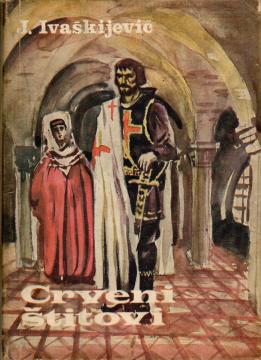
Crveni štitovi

Crveni štitovi

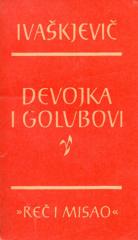
Jaroslav Ivaškijevič

"Red Shields" is a historical novel that narrates the dramatic events of Poland's medieval past. One of the key works of Polish literature, recognizable by its lyrical language and deep reflection on historical milestones.

The plot is set in the 13th century and follows the life of the Polish prince Henryk Pobożny, who faces the Mongol invasion and the fateful battle of Legnica in 1241.

The novel skilfully combines historical fact and literary fiction, creating a deep psychological study of character and time. Prince Henrik, portrayed as a brave and dedicated leader, faces inner dilemmas and fears as he tries to protect his people and preserve Christian values ​​in a time of great trials.

Through lavish descriptions and the atmosphere of medieval Europe, Ivashkievich depicts the clash of civilizations — between Christian Europe and the pagan Mongols. The novel raises questions about faith, responsibility, and moral choices as Prince Henrik strives to defend his homeland in the face of an overwhelming military threat.

The title "Red Shields" symbolizes the bloody struggle and heroism of Polish warriors, but also the heavy burden of the ruler's duty. Through complex characters and striking scenes of battles, Ivashkievich builds a powerful epic story of sacrifice and tragedy, while at the same time analyzing human destiny in the face of imminent defeat.

Original title
Czerwone tarcze
Translation
Petar Vujičić
Editor
Gojko Janjušević
Graphics design
Mirko Stojnić
Dimensions
17 x 12.5 cm
 
The book consists of two volumes.
Pages total
265
Publisher
Progres, Novi Sad, 1965.
 
Latin alphabet. Hardcover.
Language: Serbian.

No copies available

The last copy was sold recently.


Are you interested in another book? You can search the offer using our search engine or browse books by category.

You may also be interested in these titles

Bijelo ciganče

Bijelo ciganče

Vidoe Podgorec

The story of a boy named Tarun, who lost his parents during the war after they were killed by the Nazis. He was left by the side of the road, where he was found by wandering Roma who decided to adopt him. Because of his fair skin, they called him "White G

Svjetlost, 1989.
Croatian. Latin alphabet. Hardcover.
4.36
Kraljica Pedauque, Bogovi žeđaju

Kraljica Pedauque, Bogovi žeđaju

Anatole France
Naprijed, 1965.
Croatian. Latin alphabet. Hardcover with dust jacket.
4.983.74
Hiljadu ždralova

Hiljadu ždralova

Jasunari Kavabata

The tea ceremony, arranging flowers, arranging gardens and the art of creating beautiful porcelain stand in the background of this novel as symbols of the eternal and timeless in human creativity.

Dečje novine, 1989.
Croatian. Latin alphabet. Paperback.
2.86
Traženje apsolutnog

Traženje apsolutnog

Honore de Balzac
Svjetlost, 1970.
Croatian. Latin alphabet. Hardcover.
4.99 - 5.00
Svadba

Svadba

Mihailo Lalić
Izdavačko preduzeće "Rad", 1964.
Serbian. Latin alphabet. Paperback.
2.50
Izvršne naredbe

Izvršne naredbe

Tom Clancy
Algoritam, 2003.
Croatian. Latin alphabet. Hardcover.
11.9910.79