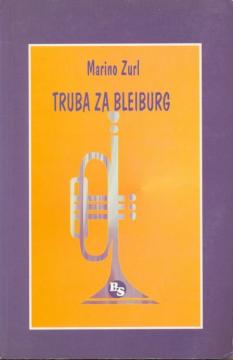
Truba za Bleiburg
Marino Zurl (1929–2006), a Croatian writer and publicist, writes in his novel Trumpet for Bleiburg about one of the most controversial and taboo topics in Croatian history – the Bleiburg Massacre and the Stations of the Cross in 1945.
The author does not focus primarily on historical facts, the chronology of events, or the political causes of the mass liquidations of defeated Croatian soldiers and civilians after the surrender at Bleiburg. Instead, the novel turns to the consequences for the next generation – the children and grandchildren of the victims, those who carry the trauma, silence, fear, and inability to deal with the past in socialist Yugoslavia.
The story follows characters who try to break the wall of silence: the sons and daughters of the murdered, those who survived the camps, and those who participated in the repression. Zurl uses intimate, family perspectives, memories, dreams, and hallucinations to depict a deep wound that is passed down through generations – the “Croatian syndrome” of collective trauma, guilt, fear, and repressed identity.
The title “Trumpet for Bleiburg” symbolizes a call to wake up, to speak out loudly about a forbidden topic – the trumpet as an alarm, but also as a posthumous sign for the dead. The novel is emotional, introspective, sometimes lyrical, with elements of psychological drama and criticism of the totalitarian system that imposes silence.
The book was an important contribution to opening up the topic of Bleiburg in Croatian literature in the 1990s, when the topic was emerging from the underground. Zurl writes without pathos, but with deep compassion for the victims and their descendants, emphasizing that reconciliation is possible only through truth and memory.
One copy is available
- Signature of previous owner