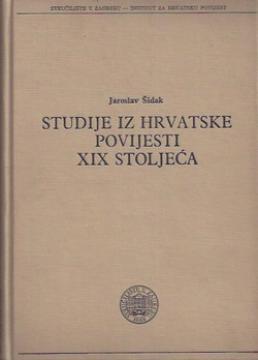
Studije iz hrvatske povijesti XIX stoljeća

Studije iz hrvatske povijesti XIX stoljeća

Jaroslav Šidak

Šidak's Studies provide a detailed insight into the Croatian Renaissance of the 19th century, exploring political, cultural and economic processes, with an emphasis on the Illyrian Movement, the abolition of serfdom and the struggle for national autonomy

The collection "Studies from 19th-Century Croatian History" by Jaroslav Šidak contains a series of articles and studies on key aspects of 19th-century Croatian history, a period of national revival and political turmoil within the Habsburg Monarchy. Šidak, a distinguished Croatian historian, focuses on the social, political, and cultural processes that shaped Croatian identity.

The book covers topics such as the Illyrian Movement, the role of Ljudevit Gaj and other revivalists, and the struggle for Croatian autonomy in the context of Austrian and Hungarian pressure. Šidak analyzes the significance of the Croatian-Slavonian Ban Conference, the development of printing and literature as tools of national emancipation, and the conflicts between Illyrian and Hungarian currents. He focuses in particular on the economic backwardness of Croatia, the abolition of serfdom in 1848, and the impact of the 1848–1849 revolution on Croatian politics.

Methodologically, Šidak uses archival sources, emphasizing the importance of empirical evidence. His approach is analytical, with an emphasis on the connection of Croatian events with the European context, such as liberal and nationalist movements. Although written in the spirit of Yugoslav historiography, the book avoids ideological bias, offering an objective account.

Editor
Stjepan Antoljak, Bogdan Krizman, Ive Mažuran
Graphics design
Živko Haramija
Dimensions
24 x 17 cm
Pages
401
Publisher
Institut za hrvatsku povijest, Zagreb, 1973.
 
Latin alphabet. Hardcover.
Language: Croatian.

No copies available

The last copy was sold recently.
 

Are you interested in another book? You can search the offer using our search engine or browse books by category.

You may also be interested in these titles

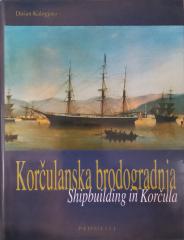
Korčulanska brodogradnja / Shipbuilding in Korčula

Korčulanska brodogradnja / Shipbuilding in Korčula

Dušan Kalogjera

The monograph Korčula Shipbuilding by Dušan Kalogjera explores the rich history of shipbuilding on the island of Korčula, a key center of Adriatic maritime tradition from the Middle Ages to the present day.

Prometej, 1998.
Croatian. Latin alphabet. Hardcover with dust jacket.
87.32
Na vratima Požeške doline

Na vratima Požeške doline

Dragutin Pavličević

A classic of local historiography, it depicts the history, geography and culture of the Požega Valley from prehistoric times to the modern era. The work describes the region's strategic position, the influences of the Romans, Ottomans and Habsburgs, with

Matica hrvatska, 1961.
Croatian. Latin alphabet. Paperback.
12.36
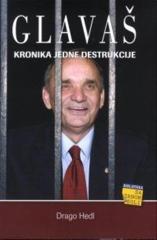
Glavaš – kronika jedne destrukcije

Glavaš – kronika jedne destrukcije

Drago Hedl

In Glavaš – Chronicle of a Destruction, Drago Hedl reveals the rise and fall of Branimir Glavaš, through a story of power, crime, and moral decline in post-war Slavonia. The documentary research turns into a poignant chronicle of our society.

Novi Liber, 2010.
Croatian. Latin alphabet. Paperback.
22.46
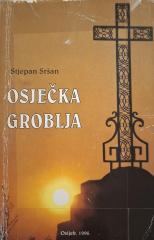
Osječka groblja

Osječka groblja

Stjepan Sršan

The book is deeply rooted in the local history and culture of Osijek, with an emphasis on cemetery motifs that serve as a metaphor for memory, death, and disappearance.

Povijesni arhiv u Osijeku, 1996.
Croatian. Latin alphabet. Paperback.
5.26
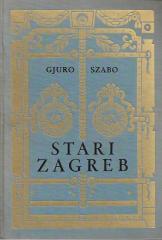
Stari Zagreb

Stari Zagreb

Gjuro Szabo

A classic work of Croatian historiography, published in 1941, which provides a fascinating overview of the historical development of Zagreb, from its earliest mentions to Szabin's time, and is an indispensable source for anyone who wants to better underst

Spektar, 1971.
Croatian. Latin alphabet. Hardcover.
11.32
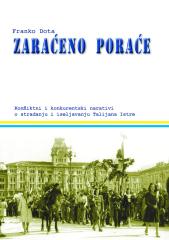
Zaraćeno poraće: Konfliktni i konkurentski narativi o stradanju i iseljavanju Talijana Istre

Zaraćeno poraće: Konfliktni i konkurentski narativi o stradanju i iseljavanju Talijana Istre

Franko Dota

The book analyzes how conflicting historical narratives about the suffering and mass emigration of Italians from Istria and Rijeka developed in Croatia and Italy after World War II (1943–1956), debunking myths and encouraging an empathetic approach to the

Srednja Europa, 2010.
Croatian. Latin alphabet. Paperback.
11.32