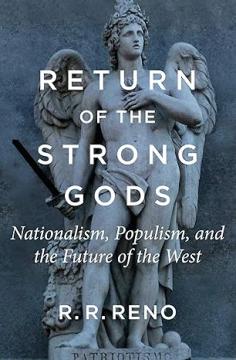
Return of the Strong Gods: Nationalism, Populism, and the Future of the West
No copies available
The last copy was sold recently.
No copies available
The last copy was sold recently.
Are you interested in another book? You can search the offer using our search engine or browse books by category.
What exactly is television? How does it function in a promised land that uses it to produce its own history, and at a rapid pace, in the absence of a tradition of the European or any other ancient type?
Amir Duranović's book reconstructs in detail the dramatic year 1966 and the Fourth (Brion) Session of the Central Committee of the Communist Party of Yugoslavia (July 1–2, 1966), at which Aleksandar Ranković, the long-time head of the UDB and vice preside
Crime (1955) by Ivan Potrč is a historical novella that focuses on the last days of communist illegals Đuro Đaković and Nikola Hećimović, key figures of the Communist Party of Yugoslavia in the period between the two world wars.
In her book, Ece Temelkuran analyzes how societies are gradually sliding into authoritarianism. Through personal experiences and global examples, she reveals patterns of loss of freedom, compassion, and truth in the modern world.
In Between Extremes, Muharem Bazdulj reflects on the space of the former Yugoslavia through three essays on Bosnia, the common past, and contemporary Serbia. With warmth and irony, he reveals the similarities, differences, and paradoxes of our region.
The book by Raif Dizdarević, one of the last living actors of Yugoslav diplomacy, presents his reconstruction of the most fateful moment of post-war Yugoslavia – the split with Stalin and the Informburo in 1948–1953.