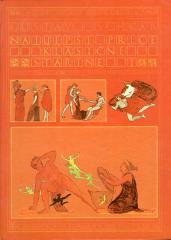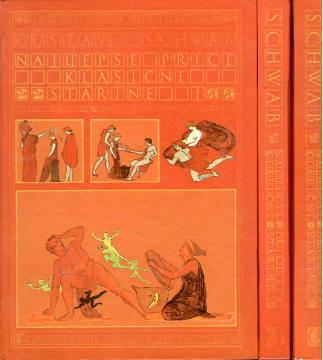
Najljepše priče klasične starine

Najljepše priče klasične starine

Gustav Schwab

Schwab's work restores and develops a sense of the value of antiquity, that inexhaustible source of folk fantasy that seeks to interpret and explain the world with the original poetic power recognized in the traditions of ancient man.

Greek myths especially marked the very basis of the entire Western culture, they have diverse motifs and great poetic beauty. Olympian, underground and sea gods, lower deities, and heroes who are of divine origin by father or mother, are the main heroes of these mythical stories. The most famous are Prometheus, Heracles, Theseus, Dioscuri, Jason, Perseus, Achilles, Melagar, and many others who carry out often difficult and dangerous tasks assigned to them by the gods or customs inherited from the gods. Schwab covers larger mythological cycles, such as the Trojan War, but there are also the famous heroes Daedalus and Icarus, the Argonauts, Orpheus and Eurydice, Antigone and many others.

Original title
Die schonsten sagen des klassischen altertums
Translation
Stjepan Hosu
Editor
Branko Matan
Illustrations
John Flaxman, Asmus J. Carstens, Ed. Schuler, C. Bartling
Graphics design
Zoran Pavlović
Dimensions
24 x 17 cm
 
The book consists of 3 volumes.
Pages total
804
Publisher
Grafički zavod Hrvatske (GZH), Zagreb, 1989.
 
Latin alphabet. Hardcover.
Language: Croatian.

One copy is available

Najljepše priče klasične starine
Volume 3
Pages: 309
Condition:Used, excellent condition
Discounted price: 5.254.20
20% discount is valid until 6/28/26 11:59 pm
 

Are you interested in another book? You can search the offer using our search engine or browse books by category.

You may also be interested in these titles

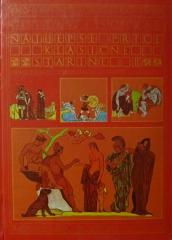
Najljepše priče klasične starine 2. dio

Najljepše priče klasične starine 2. dio

Gustav Schwab
Grafički zavod Hrvatske (GZH), 1989.
Croatian. Latin alphabet. Hardcover.
5.36
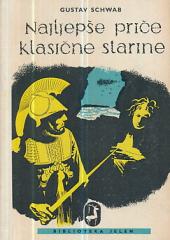
Najljepše priče klasične starine

Najljepše priče klasične starine

Gustav Schwab
Mladost, 1972.
Croatian. Latin alphabet. Hardcover.
7.22
Proces

Proces

Franz Kafka

Kafka wrote The Process between 1914 and 1915, published posthumously in 1925. The novel is unfinished but with an added final chapter by Max Brod. Edition with a foreword by B. Živojinović and an afterword by Walter Killi.

BIGZ, 1990.
Serbian. Latin alphabet. Paperback.
4.26
Crni obelisk

Crni obelisk

Erich Maria Remarque
Otokar Keršovani, 1965.
Croatian. Latin alphabet. Hardcover.
4.90
U Kordiljerima

U Kordiljerima

Karl May

In the Cordilleras (1894) is an adventure novel, a sequel to On the Rio de la Plata, part of May's South American cycle. The book follows adventures in Argentina during the revolutions, emphasizing themes of justice, forgiveness, and the struggle with the

Stvarnost, 1966.
Croatian. Latin alphabet. Hardcover.
4.52 - 7.32
Noć

Noć

Edgar Hilsenrath

A poignant novel describing life in a Jewish ghetto in Ukraine, based on the author's experience as a Holocaust survivor. Set in the fictional town of Prokov, the novel follows the inhabitants of the ghetto, especially Raneko, as they struggle to survive.

August Cesarec, 1982.
Croatian. Latin alphabet. Hardcover with dust jacket.
6.58