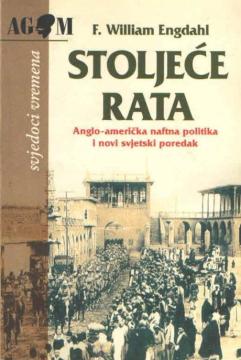
Stoljeće rata: Anglo-američka naftna politika i novi svjetski poredak

Stoljeće rata: Anglo-američka naftna politika i novi svjetski poredak

Frederick William Engdahl

The author finds the causes of international conflicts and wars in attempts to control money and energy resources. The book sheds light on the hidden principles and leading circles of East and West that were behind the events until the end of the Cold War

On the basis of oil, the "special relations" between Britain and the United States of America, established after the Versailles Peace Conference in 1919, were established. These two countries combined the power of oil and international finance into one of the most destructive forms of political hegemony in world history. The book reveals the way in which this Anglo-American "new world order" is shaped around the invisible threads of strategic control over oil and raw materials. The book also reveals shocking and previously unknown details about a secret meeting in Saltsjöbaden, Sweden in 1973, where a proposal was made to raise the price of oil by 400% to shore up the tottering dollar empire. The author sheds light on the role of oil policy in the establishment of the new post-war "informal empire" of neocolonialism, thereby providing a negative overview of the history of the last hundred years, while at the same time successfully avoiding the usual clichés of "right" and "left".

Original title
A century of war
Translation
Neđeljka Batinović
Dimensions
20 x 13.5 cm
Pages
420
Publisher
AGM, Zagreb, 2000.
 
Latin alphabet. Paperback.
Language: Croatian.

One copy is available

Condition:Used, excellent condition
Discounted price: 12.5610.05
20% discount is valid until 5/14/26 11:59 pm
 

Are you interested in another book? You can search the offer using our search engine or browse books by category.

You may also be interested in these titles

Kako sam djeci objasnio demokratiju

Kako sam djeci objasnio demokratiju

Miro Cerar

A book that deals with the concept of democracy from its origins in ancient Greece, through the dark ages of European history when it practically disappeared from the face of the earth, up to the present day.

Buybook, 2014.
Croatian. Latin alphabet. Paperback.
11.9810.78
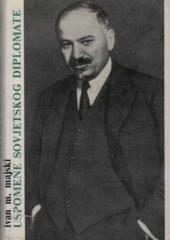
Uspomene sovjetskog diplomate

Uspomene sovjetskog diplomate

Ivan Mihajlovič Majski

Memoirs of a long-time USSR ambassador to London (1932–1943): Majski gives first-hand testimony about pre-war diplomacy, the policy of appeasement, the Ribbentrop-Molotov Pact, and war negotiations with the West.

BIGZ, 1981.
Serbian. Latin alphabet. Hardcover with dust jacket.
5.223.92
Radovan Karadžić: Uzroci, postanak i uspon genocida u Bosni i Hercegovini

Radovan Karadžić: Uzroci, postanak i uspon genocida u Bosni i Hercegovini

Robert J. Donia

Robert J. Donia's book provides an analytical look at Karadzic's life and the political, ideological, and social processes that led to war crimes and genocide in the 1990s.

University press, 2016.
Croatian. Latin alphabet. Paperback.
32.56
Pustinjska oluja – ratno izvješće iz zaljeva

Pustinjska oluja – ratno izvješće iz zaljeva

Fran Višnar

"Desert Storm" by Fran Višnar is a war report and non-fiction book about the 1991 Gulf War, known as Operation Desert Storm.

Radio 101, 1991.
Croatian. Latin alphabet. Paperback.
8.85
Zašto je ubijen Ivo Pukanić?

Zašto je ubijen Ivo Pukanić?

Berislav Jelinić

The best-selling Croatian journalistic book of 2009. The author, long-time journalist and editor of Nacional Berislav Jelinić (who succeeded Pukanić as head of the weekly), wrote it just a year after the assassination on October 23, 2008 in Zagreb.

Sljedeći savjet, 2014.
Croatian. Latin alphabet. Paperback.
24.56
Sudbonosni podvig Jugoslavije: Podsjećanje na historijsko NE staljinizmu, događaj koji je opredijelio budućnost Jugoslavije

Sudbonosni podvig Jugoslavije: Podsjećanje na historijsko NE staljinizmu, događaj koji je opredijelio budućnost Jugoslavije

Raif Dizdarević

The book by Raif Dizdarević, one of the last living actors of Yugoslav diplomacy, presents his reconstruction of the most fateful moment of post-war Yugoslavia – the split with Stalin and the Informburo in 1948–1953.

Udruženje za modernu historiju (UMHIS), 2018.
Croatian. Latin alphabet. Paperback.
23.58