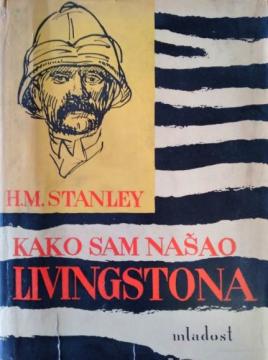
Kako sam našao Livingstona : Putovanja, doživljaji i otkrića u Centralnoj Africi
Rare book

Kako sam našao Livingstona : Putovanja, doživljaji i otkrića u Centralnoj Africi

Henry Morton Stanley

Henry Morton Stanley describes his 1871 expedition, organized by the New York Herald, to find the missing Scottish missionary and explorer David Livingstone in the heart of Africa. A classic of 19th-century travel and exploration literature.

The book details Stanley's expedition, which was launched in 1871 by the American newspaper New York Herald. The task was: to find David Livingstone, the famous Scottish missionary and explorer, who had not been heard from for years. Stanley, a journalist and adventurer, sets off from Zanzibar with a large caravan through the dangerous terrain of Central Africa - fighting diseases (malaria, dysentery), hunger, wild animals, hostile tribes and difficult terrain.

After eight months of wandering, on November 10, 1871, in the town of Ujiji on the shores of Lake Tanganyika, he meets the tormented, sick Livingstone. The legendary greeting Dr. Livingstone, And you presume? has become one of the most famous moments in the history of exploration.

Stanley describes in detail the geographical discoveries, encounters with natives, Arab slave traders, flora and fauna, but also the everyday difficulties of the expedition. The book is a mixture of adventure account, travelogue, and personal experience – written in a dynamic, dramatic, and sometimes sensationalist style that suited the tastes of the Victorian audience.

The work cemented Stanley’s status as a celebrated explorer and paved the way for his later major expeditions (e.g., down the Congo River). At the same time, it sheds light on the “dark continent” of Europe during the era of colonial aspirations.

Despite the controversy surrounding Stanley’s methods and later role in colonialism, the book remains a thrilling testament to courage, perseverance, and the spirit of exploration. It is recommended for anyone interested in African discovery, Victorian adventure, and classic travel writing.

Original title
How I Found Livingstone
Translation
Stojana Čulić
Graphics design
Dalibor Parać
Dimensions
20 x 15 cm
Pages
369
Publisher
Mladost, Zagreb, 1953.
 
Latin alphabet. Hardcover with dust jacket.
Language: Croatian.

One copy is available

Condition:Used, very good condition
Damages or inconvenience notice:
  • The cover is missing
 

Are you interested in another book? You can search the offer using our search engine or browse books by category.

You may also be interested in these titles

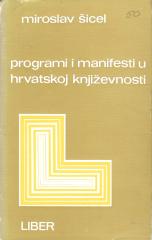
Programi i manifesti u hrvatskoj književnosti

Programi i manifesti u hrvatskoj književnosti

Miroslav Šicel

The collection "Programs and Manifestos in Croatian Literature", edited by Miroslav Šicel and published by Liber in 1972, represents a key collection of texts that shaped the direction of Croatian literature through various historical phases.

Liber, 1972.
Croatian. Latin alphabet. Paperback with dust jacket.
6.244.99
Ranjeni pejzaž

Ranjeni pejzaž

Vladimir Mičetić

A book by Vladimir Mičetić, a doctor and volunteer of the Homeland War from Kutina. The work was awarded the literary prize "We Were the First When It Was Necessary" for 2010, awarded by the Association of Croatian Homeland War Veterans.

Spiritus Movens, 2010.
Croatian. Latin alphabet. Hardcover.
11.52
Kreni!

Kreni!

Anita Martinac

The novel Kreni!, written based on true events, tells the story of Operation June Dawn in 1992 and pays tribute to the fallen Croatian defenders through descriptions of the fates of real people and their sacrifice.

Naklada Protuđer, 2024.
Croatian. Latin alphabet. Paperback.
16.46
Pisma Cosimu I. Mediciju 1566.

Pisma Cosimu I. Mediciju 1566.

Marin Držić

Držić's letters to Cosimo I de' Medici represent a significant document of Croatian Renaissance literature and history. Držić sent three letters to Cosimo I, Grand Duke of Tuscany, between June and August 1566, while he was staying in Florence.

Croatian P.E.N. Centre & Most / The Bridge, 1993.
Croatian. Latin alphabet. Paperback.
8.32
In the Heart of the Sea: The Tragedy of the Whaleship Essex

In the Heart of the Sea: The Tragedy of the Whaleship Essex

Nathaniel Philbrick

The book describes the sinking of the whaler Essex in 1820 after a whale attack and the crew's struggle for survival in the Pacific, which served as inspiration for the novel Moby Dick.

Penguin Books Ltd, 2001.
English. Latin alphabet. Paperback.
7.56
Zločin

Zločin

Ivan Potrč

Crime (1955) by Ivan Potrč is a historical novella that focuses on the last days of communist illegals Đuro Đaković and Nikola Hećimović, key figures of the Communist Party of Yugoslavia in the period between the two world wars.

Svjetlost, 1982.
Croatian. Latin alphabet. Hardcover.
4.28