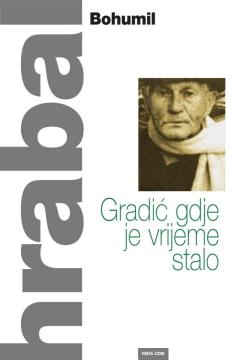
Gradić gdje je vrijeme stalo

Gradić gdje je vrijeme stalo

Bohumil Hrabal

Bohumil Hrabal, a Czech writer known for his lyrical grotesque and humor, in his novel The Town Where Time Stood Still evokes childhood in the small town of Libeň (part of Prague), where time seems to stand still in a magical but melancholic world.

The narrator, the writer's alter ego, recalls the 1920s: his father's brewery, his mother's love of animals, street adventures and family secrets, where everyday life turns into a fairy tale full of wonder and sadness.

The novel is a series of fragmentary images: a boy plays in the brewery gardens, watches the royal train, meets eccentric characters such as a kneeling uncle or a grandmother who tells the story. The time that has "stood still" symbolizes the lost idyll in the face of industrialization and wars - the small town is a microcosm of Europe, where Czech tradition, Jewish culture and German influences mix. Hrabal's style - stream of consciousness, hyperbole, love of detail - creates a poetic symphony: laughter provokes tears, and nostalgia bites the heart.

The themes are the transience of childhood, the power of the story, the conflict of idyll and reality. As part of Hrabal's "autobiographical" cycle (First Haircut, Long Live Yugoslavia), the novel celebrates life as a "small town" in the soul, where time does not stop, but is transformed into art. A masterpiece for lovers of Czech prose, it reminds us: "Life is a dream, and a dream is eternity."

Original title
Mastecko, kde se zastavil čas
Translation
Sanja Milićević Armada
Editor
Nermina Husković
Dimensions
21.5 x 14 cm
Pages
151
Publisher
Hena Com, Zagreb, 2006.
 
Latin alphabet. Paperback.
Language: Croatian.
ISBN
978-9-53259-004-3

One copy is available

Condition:Used, excellent condition
Discounted price: 7.625.72
25% discount is valid until 12/9/25 11:59 pm
 

Are you interested in another book? You can search the offer using our search engine or browse books by category.

You may also be interested in these titles

Prebučna samoća

Prebučna samoća

Bohumil Hrabal

Loud Loneliness (1976), a novel by Bohumil Hrabal, is an introspective monologue by Hant'a, an old worker at a paper collection center in Prague, who has been pressing waste paper and books into packages with a hydraulic press for 35 years, calling it his

Hena Com, 2004.
Croatian. Latin alphabet. Paperback.
7.24
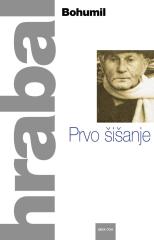
Prvo šišanje

Prvo šišanje

Bohumil Hrabal

The First Haircut, a short story written in 1970 and published in 1976, is the first in a series of prose pieces by Bohumil Hrabal describing Nymburk, the town where he spent his childhood. In 1981, The First Haircut was adapted for the screen by Jiry Men

24 sata, 2007.
Croatian. Latin alphabet. Paperback.
7.24
Žene, bajke, kraljice

Žene, bajke, kraljice

Nada Gašić, Julijana Adamović, Nataša Govedić, Vera Vujović, Lada Žigo, Jadranka Pintarić, Jadran...

Women, Fairy Tales, Queens – is the first in a series of story collections intended for an adult audience in which nine Croatian female writers decided to give voice to female characters from fairy tales.

Kreativna mreža, 2021.
Croatian. Latin alphabet. Paperback.
9.98
Figarova ženidba ili Ludi dan: Komedija u pet ćinova

Figarova ženidba ili Ludi dan: Komedija u pet ćinova

Pierre-Augustin Caron de Beaumarchais

The comedy "The Marriage of Figaro, or The Mad Day" (1784) is a sequel to The Barber of Seville. The Marriage of Figaro criticizes social injustices through love affairs and intrigue, celebrating Figaro and Susanna's ingenuity in the fight against aristoc

Srpska književna zadruga (SKZ), 1925.
Serbian. Cyrillic alphabet. Hardcover.
7.58
Seljaci u gradu: izvorna šaljiva igra u dva čina

Seljaci u gradu: izvorna šaljiva igra u dva čina

Nikola Kos

The humorous play Villagers in the City presents a humorous depiction of the encounter between rural and urban mentality. The plot revolves around the arrival of rural characters in the city, where they are confronted with urban customs and lifestyles, wh

St. Kugli, 1883.
Croatian. Latin alphabet. Paperback.
6.74
Mjesec iznad Splita

Mjesec iznad Splita

Predrag Lucić

Predrag Lucić's second book of poetry, after "The Lovers from Verona" (2007), is a collection of irony, melancholy and contempt for canons - a dedication to the "ridicules" of Split, those who have woven their antics into the city's collective memory.

Algoritam, 2012.
Croatian. Latin alphabet. Paperback.
6.34