Kad sam bio hodža

Kad sam bio hodža

Damir Ovčina

It is a story about the war in Sarajevo, gentle and accurate, concise, powerful, poetic and terrible, witty and precise, unpredictable and real.

Told consistently and simply, clearly and poetically, this novel makes our Sarajevo story understandable and close. Using the power of the unspoken and clearly legible, condensing both speech and thought and atmosphere, mixing cultural references and street slang, avoiding titles and subtitles, question marks and exclamation marks, periods and colons, names and descriptions, baroque and postmodern, verbs and adjectives, the writer tells the story in rhythm... Accumulating tension and nausea with events and details to the point of unbearable, he only in the last sentence, closing the circle, frees the reader from tension and torment... (…) Art enlightens and civilizes, and this novel has convincingly and uniquely demonstrated this. It reminds us of ourselves, of a world that already seems distant and somewhat unreal today. When I Was a Hodja was written by someone who reads devotedly and listens patiently, and whoever reads this text will observe reality more carefully.

Editor
Damir Uzunović
Graphics design
Aleksandra Nina Knežević
Dimensions
21 x 13.5 cm
Pages
530
Publisher
Buybook, Sarajevo, 2016.
 
Latin alphabet. Paperback.
Language: Croatian.

No copies available

The last copy was sold recently.
 

Are you interested in another book? You can search the offer using our search engine or browse books by category.

You may also be interested in these titles

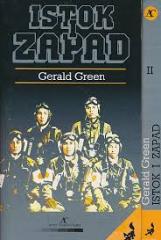
Istok i Zapad

Istok i Zapad

Gerald Green

In East and West (1986), Green weaves an epic tale of love and war, intertwining the lives of ordinary people with great historical events. The novel is a powerful fresco of war, but also of an indestructible spirit seeking light amidst darkness.

August Cesarec, 1990.
Croatian. Latin alphabet. Paperback.
The book consists of two volumes
7.42 - 7.46
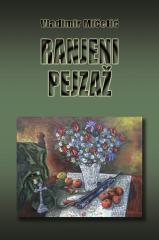
Ranjeni pejzaž

Ranjeni pejzaž

Vladimir Mičetić

A book by Vladimir Mičetić, a doctor and volunteer of the Homeland War from Kutina. The work was awarded the literary prize "We Were the First When It Was Necessary" for 2010, awarded by the Association of Croatian Homeland War Veterans.

Spiritus Movens, 2010.
Croatian. Latin alphabet. Hardcover.
11.52
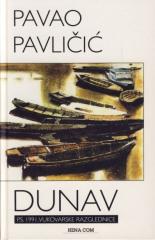
Dunav: P.S. 1991. vukovarske razglednice

Dunav: P.S. 1991. vukovarske razglednice

Pavao Pavličić

A moving and poignant chronicle of the siege and destruction of Vukovar in 1991 through 57 short "postcard" chapters. Pavličić does not write from the perspective of an "ordinary" Zagreb resident who spent the summer of 1991 in Vukovar, and then followed

Hena Com, 1999.
Croatian. Latin alphabet. Hardcover.
11.26
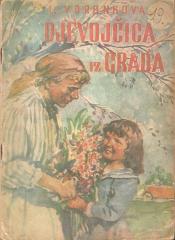
Djevojčica iz grada

Djevojčica iz grada

Liubov Voronkova

The novel The Girl from the City by Soviet writer Lyubov Voronkova, published in 1942, is a moving story of childhood, survival, and hope during World War II. The work is written in a simple yet emotional style, suitable for younger readers.

A.F.Ž. Hrvatske, 1947.
Croatian. Latin alphabet. Paperback.
12.44
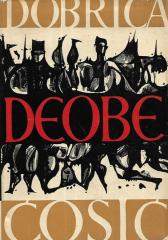
Deobe

Deobe

Dobrica Ćosić

Deobe is a novel about the tragic division of Serbs into Chetniks and Partisans during World War II. Winner of the NIN Award, it is part of a wider epic trilogy, inspired by Ćosić's experiences and historical documents.

Prosveta, 1963.
Croatian. Latin alphabet. Hardcover with dust jacket.
13.74
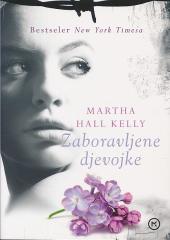
Zaboravljene djevojke

Zaboravljene djevojke

Martha Hall Kelly

The novel The Forgotten Girl is based on the real life of a member of New York's posh circles, who fought for the rights of Kunić, a group of women who survived the horrors of the Ravensbrück concentration camp.

Mozaik knjiga, 2018.
Croatian. Latin alphabet. Paperback.
7.98