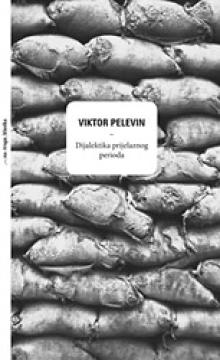
Dijalektika prijelaznog perioda
The book represents the author's anthology - the largest part is the novel Čisla (Čisla), followed by the short story Macedonian Criticism of French Thought and several short stories (Odin vog, Akiko, Fokus-grupa, Gost na prazniku bon).
At the heart of Chisla's novel is Stepa (Stepan), an oligarch of the new Russian capitalism of the 90s/2000s. He is obsessed with numbers: his "solar" number 34 (symbol of power, success) clashes with "lunar" 43 (symbol of ruin, Chubais and liberals). Stepa builds his life around the numerological cabal - he chooses numbers for phones, rooms, cars, lovers, jobs - believing that in this way he will control destiny. But the crisis of 1998 and the political turmoil shatter the illusion: the numbers turn against him, leading to paranoia, hallucinations and existential decline.
Pelevin mocks post-Soviet Russia: oligarchs, mafia, politics, Buddhism, New Age, capitalism and spirituality as commodities. Dialectic is a parody of Marxism – the transition from nowhere (Soviet nothingness) to nowhere (the new Russian chaos), where nothing changes, only repeats itself in new forms.
The stories are short, absurd, Buddhist-satirical: about virtual sex, Japanese culture, focus groups and "bon" (Buddhist holiday of the dead). The entire book is a cynical, witty critique of the transition – from communism to capitalism, from the material to the virtual, from nothingness to nothingness – with Pelevin's signature blend of philosophy, pop culture and dark humor.
One copy is available