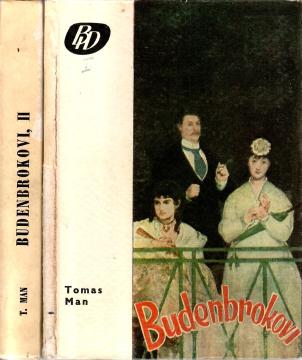
Budenbrokovi
Rare book

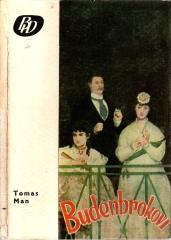
Budenbrokovi

Thomas Mann

The Buddenbrooks is not just a family chronicle – it is a profound, melancholic fresco of how time and change inexorably creep into the core of a respectable bourgeois family, bringing with them a downfall that is both tragic and inevitable.

Mann wrote the novel when he was just 26, drawing on his own family history from Lübeck – a city that is never explicitly mentioned in the book, but pulsates in every scene, in every description of a house, a dinner party, a business conversation. The story follows four generations of the Buddenbrook family, wealthy grain and commodity merchants in northern Germany, from the height of their prosperity in 1835 to their complete collapse in the late 1870s. What begins as a picture of stability, tradition and pride – family dinners, business successes, marriages of convenience – slowly turns into a story of loss: financial, moral, spiritual.

At the center are characters who bear the burden of their heritage: old Johann, the embodiment of the old Hanseatic discipline; his son Thomas, who struggles to keep the company going in the age of industrialization but feels his life slipping through his fingers; his sister Tony, lively and proud, whose marriages and life decisions become symbols of futile resistance to change; brother Christian, eccentric and unfit for bourgeois life, who most clearly shows the gap between the old world and the new. And then there is Hanno, the last in the line – a sensitive, artistic boy who prefers music to work, and whose fate symbolizes the final break with tradition.

Mann writes with irony, but also with compassion – there is no caricature here, but a subtle understanding of how the bourgeoisie eats itself from within: when values ​​are transformed into rigid forms, when work is separated from passion, when individuality is suffocated under the burden of the "family name". The novel is full of details – the smells of food, the rustling of dresses, the sounds of the harbor – that make the world tangible, almost cinematic.

For this novel, Mann won the Nobel Prize in 1929, and it remains his most accessible and beloved work – a universal story of how great families and epochs fall apart, not in great catastrophes, but in quiet, everyday defeats.

Original title
Buddenbrooks: Verfall einer Familie
Translation
O. Davidović, P. Ognjanović
Editor
Milica Grabovac
Dimensions
17 x 12 cm
Pages total
702
Publisher
Svjetlost, Sarajevo, 1961.
 
Latin alphabet. Hardcover.
Language: Serbian.

The book consists of two volumes.

Jedan višetomni primjerak je u ponudi.
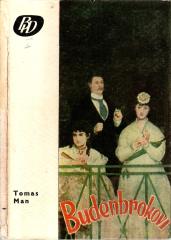
Budenbrokovi
Volume 1
Pages: 364
Condition:Used, very good condition
Damages or inconvenience notice:
  • Slight damage to the cover
Budenbrokovi
Volume 2
Pages: 338
Condition:Used, very good condition
Damages or inconvenience notice:
  • Damaged book cover
 

Are you interested in another book? You can search the offer using our search engine or browse books by category.

You may also be interested in these titles

Smrt u Veneciji

Smrt u Veneciji

Thomas Mann
Jutarnji list, 2004.
Croatian. Latin alphabet. Hardcover with dust jacket.
3.42
Tonio Kröger

Tonio Kröger

Thomas Mann
Zora, 1951.
Croatian. Latin alphabet. Paperback.
4.68
Buddenbrookovi: Propadanje jedne obitelji

Buddenbrookovi: Propadanje jedne obitelji

Thomas Mann

Thomas Mann's first novel, published in 1901 when the author was only 26 years old. The work immediately brought the young writer worldwide fame and contributed significantly to his Nobel Prize for Literature in 1929.

Zora, 1950.
Croatian. Latin alphabet. Hardcover with dust jacket.
8.76
Crni Napoleon

Crni Napoleon

Karl Otten

The Black Napoleon (1931) is a fictional biography of Toussaint Louverture. It depicts the Haitian Revolution (1791–1803), the slave uprising in Saint-Domingue, Louverture's brilliant military and political rise, and his struggle against the colonial powe

Nakladni zavod Ante Velzek, 1940.
Croatian. Latin alphabet. Hardcover with dust jacket.
6.32 - 14.56
Fabian: Pripovijest o moralistu

Fabian: Pripovijest o moralistu

Erich Kästner

Jakob Fabian, an unemployed Germanist and moralist, wanders through Berlin in the 1930s, observing the moral, political and social decay and the rise of Nazism. He falls in love with Cornelia, but tragedies and nonsense lead him to a tragic end. Criticism

Mladost, 1952.
Croatian. Latin alphabet. Paperback.
5.32
Joseph Fouché: Roman jednoga političara

Joseph Fouché: Roman jednoga političara

Stefan Zweig

Joseph Fouché (1930) is a brilliant biography of a brilliant and unscrupulous opportunist – a Minister of Police who served all regimes: the Revolution, Napoleon and the Bourbons, becoming a symbol of political cunning and moral emptiness.

Naklada Binoza, 1935.
Croatian. Latin alphabet. Hardcover with dust jacket.
8.62