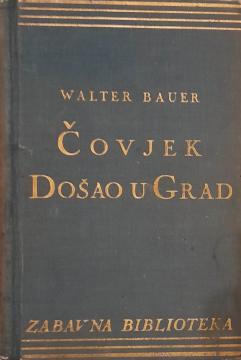
Čovjek došao u grad: Roman jednog proletariziranog seljaka
A poor peasant comes to the city seeking a better life, but faces exploitation and social injustice. The work depicts the process of proletarianization of the peasantry during the period of social change in the first half of the 20th century.
The main character represents thousands of European peasants who, during the economic crisis, lost the possibility of surviving on the land and were forced to become industrial workers. Arriving in the city, he faces difficult working conditions, job insecurity, social inequality and a sense of alienation. Instead of the promised progress, the city reveals to him the harsh reality of capitalist society in which the ordinary worker is easily replaceable and often left to misery.
Bauer realistically depicts the conflict between the traditional rural way of life and the modern urban environment. The village symbolizes the connection with nature and community, while the city represents a space of industrialization, competition and social differences. Through the protagonist's life difficulties, the author critics the economic system that deepens the gap between the rich and the poor.
The novel is interesting because it does not only talk about the individual fate of one man, but about an important social process – the proletarianization of the peasantry. Due to its strong social themes and authentic depiction of the life of the working class, it is considered a significant example of German social literature of the interwar period. The work functions simultaneously as a personal drama, social criticism and a document of a time marked by economic crisis, unemployment and mass migration from the countryside to the city.
Walter Bauer (1904–1976) came from a working-class family and is considered one of the German "workers' writers" (Arbeiterdichter). His works were highly socially engaged and dealt with the situation of workers, the unemployed and the poor. The Nazi authorities banned his work after 1933.
One copy is available
- Traces of patina
- Library stamp