Čovjek došao u grad: Roman jednog proletariziranog seljaka
Antique
Rare book

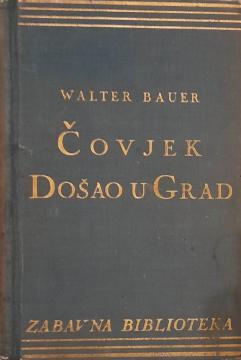
Čovjek došao u grad: Roman jednog proletariziranog seljaka

Walter Bauer

A poor peasant comes to the city seeking a better life, but faces exploitation and social injustice. The work depicts the process of proletarianization of the peasantry during the period of social change in the first half of the 20th century.

The main character represents thousands of European peasants who, during the economic crisis, lost the possibility of surviving on the land and were forced to become industrial workers. Arriving in the city, he faces difficult working conditions, job insecurity, social inequality and a sense of alienation. Instead of the promised progress, the city reveals to him the harsh reality of capitalist society in which the ordinary worker is easily replaceable and often left to misery.

Bauer realistically depicts the conflict between the traditional rural way of life and the modern urban environment. The village symbolizes the connection with nature and community, while the city represents a space of industrialization, competition and social differences. Through the protagonist's life difficulties, the author critics the economic system that deepens the gap between the rich and the poor.

The novel is interesting because it does not only talk about the individual fate of one man, but about an important social process – the proletarianization of the peasantry. Due to its strong social themes and authentic depiction of the life of the working class, it is considered a significant example of German social literature of the interwar period. The work functions simultaneously as a personal drama, social criticism and a document of a time marked by economic crisis, unemployment and mass migration from the countryside to the city.

Walter Bauer (1904–1976) came from a working-class family and is considered one of the German "workers' writers" (Arbeiterdichter). His works were highly socially engaged and dealt with the situation of workers, the unemployed and the poor. The Nazi authorities banned his work after 1933.

Original title
Ein Mann zog in die Stadt
Translation
Miloje Fruškogorac (pseud. Nikole Andrića)
Dimensions
19 x 12 cm
Pages
183
Publisher
Zabavna biblioteka - Naklada tiskare Narodnih novina, Zagreb, 1935.
 
Latin alphabet. Hardcover.
Language: Croatian.

One copy is available

Condition:Used, very good condition
Damages or inconvenience notice:
  • Traces of patina
  • Library stamp
 

Are you interested in another book? You can search the offer using our search engine or browse books by category.

You may also be interested in these titles

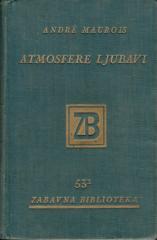
Atmosfere ljubavi

Atmosfere ljubavi

Maurois
Andre Maurois

The novel subtly and psychologically depicts three love stories/"atmospheres" through the relationship between a man and a woman, analyzing different forms of love, marital crises, jealousy, boredom and the impossibility of complete understanding between

Zabavna biblioteka - Naklada tiskare Narodnih novina, 1932.
Croatian. Latin alphabet. Hardcover.
5.42 €
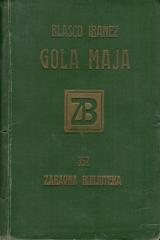
Gola maja

Gola maja

Vicente Blasco Ibanez

The famous painter Mariano Renovales, the son of a blacksmith, rises to fame in Rome, Paris and Madrid. Obsessed with his love for women and art, he paints his "Naked Maya", which leads to drama, jealousy and conflict.

Zabavna biblioteka - Naklada tiskare Narodnih novina, 1924.
Croatian. Latin alphabet. Hardcover.
7.42 €
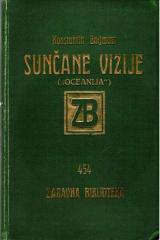
Sunčane vizije („Oceanija”): Pjesničke impresije iz Egipta, Japana, Mehika i Oceanije

Sunčane vizije („Oceanija”): Pjesničke impresije iz Egipta, Japana, Mehika i Oceanije

Konstantin Baljmont

Konstantin Balmont’s poetic travel writing explores Egypt, Japan, Mexico and Oceania, transforming landscapes, sea voyages and encounters with other cultures into reflections on beauty, myth and human life.

Naklada zaklade tiskare Narodnih novina, 1929.
Croatian. Latin alphabet. Hardcover.
4.98 €
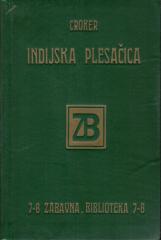
Indijska plesačica

Indijska plesačica

Bithia Mary Croker

The novel follows the love and social entanglements of British colonial circles in India. Secrets, jealousy and the conflict of different customs connect the destinies of Europeans and Indians in a tense story.

Naklada kraljevske zemaljske tiskare, 1913.
Croatian. Latin alphabet. Hardcover.
7.64 €
Nova skrižaljka

Nova skrižaljka

Pantelejmon Romanov

The New Crossword is a valuable testimony to Russian society in the turbulent post-revolutionary period – honest, sometimes critical, but always interesting and readable. Today it is appreciated as a fine example of Russian prose of the 1920s.

Zabavna biblioteka - Naklada tiskare Narodnih novina, 1930.
Croatian. Latin alphabet. Hardcover.
6.58 €
Čudnovato prijateljstvo glumca Jeseniusa

Čudnovato prijateljstvo glumca Jeseniusa

Ivan Olbracht

Ivan Olbracht's story follows the actor Jesenius, who prepares for the role of Jan Jesenius and, by identifying with him, gradually becomes psychologically destabilized and loses his sense of his own identity.

Naklada zaklade tiskare Narodnih novina, 1933.
Croatian. Latin alphabet. Hardcover.
6.46 €