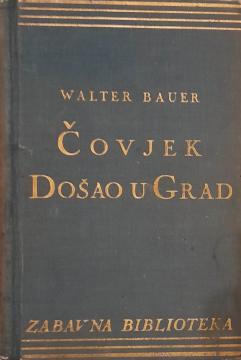
Čovjek došao u grad: Roman jednog proletariziranog seljaka
Rijetka knjiga
Antikvitet

Čovjek došao u grad: Roman jednog proletariziranog seljaka

Walter Bauer

A poor peasant comes to the city seeking a better life, but faces exploitation and social injustice. The work depicts the process of proletarianization of the peasantry during the period of social change in the first half of the 20th century.

The main character represents thousands of European peasants who, during the economic crisis, lost the possibility of surviving on the land and were forced to become industrial workers. Arriving in the city, he faces difficult working conditions, job insecurity, social inequality and a sense of alienation. Instead of the promised progress, the city reveals to him the harsh reality of capitalist society in which the ordinary worker is easily replaceable and often left to misery.

Bauer realistically depicts the conflict between the traditional rural way of life and the modern urban environment. The village symbolizes the connection with nature and community, while the city represents a space of industrialization, competition and social differences. Through the protagonist's life difficulties, the author critics the economic system that deepens the gap between the rich and the poor.

The novel is interesting because it does not only talk about the individual fate of one man, but about an important social process – the proletarianization of the peasantry. Due to its strong social themes and authentic depiction of the life of the working class, it is considered a significant example of German social literature of the interwar period. The work functions simultaneously as a personal drama, social criticism and a document of a time marked by economic crisis, unemployment and mass migration from the countryside to the city.

Walter Bauer (1904–1976) came from a working-class family and is considered one of the German "workers' writers" (Arbeiterdichter). His works were highly socially engaged and dealt with the situation of workers, the unemployed and the poor. The Nazi authorities banned his work after 1933.

Naslov izvornika
Ein Mann zog in die Stadt
Prijevod
Miloje Fruškogorac (pseud. Nikole Andrića)
Dimenzije
19 x 12 cm
Broj strana
183
Nakladnik
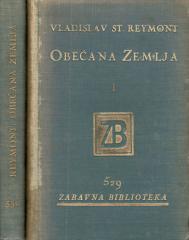
Zabavna biblioteka - Naklada tiskare Narodnih novina, Zagreb, 1935.
 
Latinica. Tvrde korice.
Jezik: Hrvatski.

Jedan primjerak je u ponudi

Stanje:Korišteno, u vrlo dobrom stanju
Oštećenja / nepogodnosti:
  • Traces of patina
  • Library stamp
Dodano u košaricu!
 

Zanima Vas i neka druga knjiga? Možete pretražiti našu ponudu pomoću tražilice ili prelistati knjige po kategorijama.

Možda će Vas zanimati i ovi naslovi

Čudnovato prijateljstvo glumca Jeseniusa

Čudnovato prijateljstvo glumca Jeseniusa

Ivan Olbracht

Ivan Olbracht's story follows the actor Jesenius, who prepares for the role of Jan Jesenius and, by identifying with him, gradually becomes psychologically destabilized and loses his sense of his own identity.

Naklada zaklade tiskare Narodnih novina, 1933.
Hrvatski. Latinica. Tvrde korice.
6,46
Jean d'Agreve: Historija jedne velike ljubavi

Jean d'Agreve: Historija jedne velike ljubavi

Eugène-Melchior de Vogüé

Jean d’Agreve (1897) is a novel by French writer Eugène-Melchior de Vogüé about tragic love, duty, and sacrifice. Set in an Alpine landscape, it combines psychological analysis, romanticism, and moral drama.

Naklada kraljevske zemaljske tiskare, 1918.
Hrvatski. Latinica. Tvrde korice.
5,32
Ingeborg

Ingeborg

Bernhard Kellermann

Ingeborg (1906) is the story of a young, beautiful and sensitive Ingeborg who falls passionately in love with the wrong man. The novel is a psychologically profound account of her love, disappointment, suffering and inner struggle between ideals and reali

Zabavna biblioteka - Naklada tiskare Narodnih novina, 1921.
Hrvatski. Latinica. Tvrde korice.
4,26
Veliki vrisak: Roman jedne mlade žene

Veliki vrisak: Roman jedne mlade žene

Renée Erdős

An intimate and emotional story about young women, their loves, passions, disappointments and internal struggles in Hungarian bourgeois society at the beginning of the 20th century.

Zabavna biblioteka - Naklada tiskare Narodnih novina, 1926.
Hrvatski. Latinica. Tvrde korice.
6,54
Tihi Don

Tihi Don

Mihail Šolohov

An epic novel about the life of the Don Cossacks on the eve of and during World War I, the October Revolution, and the Civil War. A powerful story about love, war, revolution, and the fate of an individual in the whirlwind of history. Abridged popular edi

Zabavna biblioteka - Naklada tiskare Narodnih novina, 1936.
Hrvatski. Latinica. Tvrde korice.
12,36
Atmosfere ljubavi

Atmosfere ljubavi

Andre Maurois

The novel subtly and psychologically depicts three love stories/"atmospheres" through the relationship between a man and a woman, analyzing different forms of love, marital crises, jealousy, boredom and the impossibility of complete understanding between

Zabavna biblioteka - Naklada tiskare Narodnih novina, 1932.
Hrvatski. Latinica. Tvrde korice.
5,42