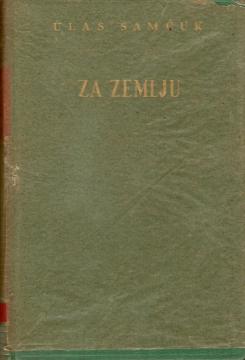
Za zemlju
The novel depicts the difficult, primitive and dramatic life of the Ukrainian countryside. Through the fates of peasants fighting for a piece of land and survival, the novel chronicles their love for the soil and their indestructible attachment to their n
For the Land is a novel-chronicle by the Ukrainian writer Ulas Samchuk (1905–1987), which realistically, almost naturally depicts the life of the Ukrainian village in the first half of the 20th century. Samchuk, who himself came from a peasant background, describes deeply and in detail the everyday life of the peasants – their constant struggle for the land, which is at the same time their mother and mistress, the source of life and the cause of all conflicts. The novel follows several generations of a family and the wider rural community through inheritance disputes, poverty, hunger, natural disasters and social changes.
The Land is the central character here – a symbol of survival, identity and freedom. The peasants are depicted as tough, stubborn, sometimes cruel, but also deeply attached to tradition, customs and nature. The author does not idealize the village; he also shows its dark sides – greed, envy, violence within the family and the village – but at the same time emphasizes the indestructible vitality and love for the native land.
The style is chronicler, epic and rich in folklore. Samchuk writes with great authenticity and knowledge of the rural mentality, which makes the novel a powerful document of the Ukrainian peasant soul. The work is one of his early works in which the emphasis is on collective, not just individual, experience.
In the Croatian context of 1941, the novel was noted because its themes were close to the rural literature of the time. Today, it is an antiquarian rarity and a valuable example of Ukrainian realistic prose of the 20th century.
One copy is available