Zagonetka podunavske civilizacije

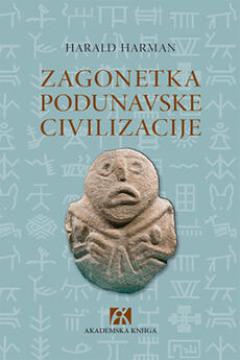
Zagonetka podunavske civilizacije

Harald Haarman

Harald Haarmann's book presents the discovery of Europe's oldest highly developed culture (c. 5500–3500 BC), known as the Danube or Old European Civilization, with an emphasis on its writing, art and influence.

The Riddle of the Danube Civilization is a popular science book by the German linguist and culturologist Harald Haarmann. In it, the author presents a synthetic presentation of the so-called Danube Civilization (Donauzivilisation), which he considers to be the oldest highly developed culture in Europe, older than the Minoan and Sumerian.

Haarmann describes a rich culture that flourished in the area from the Balkans to the Carpathians (the Vinča, Karanovo, Cucuteni-Tripoli, Lengyel cultures, etc.). The civilization had large settlements (larger than modern Mesopotamian ones), developed pottery with kilns, copper and gold metallurgy, sophisticated art, trade and – which is especially important to Haarmann – the oldest writing system in Europe (the so-called donauschrift or Old European script), which predates the Sumerian cuneiform script.

The book traces the origins of this civilization along the Black Sea, its economic, social and spiritual characteristics and its influence on later cultures, including Greek antiquity. Haarmann emphasizes that this civilization was more peaceful, egalitarian and matrifocal compared to later Indo-European warrior cultures.

The work is written in an accessible style, richly illustrated and intended for a wider audience. Although some of Haarmann's theses (especially on the level of development and writing) are controversial and not generally accepted in mainstream archaeology, the book is very influential in popular science and archaeomythology. On the Croatian/Serbian market, it has become quite popular among lovers of alternative history and ancient European cultures.

Original title
Das Rätsel der Donauzivilisation
Translation
Branka Rajlić
Dimensions
23 x 15 cm
Pages
320
Publisher
Akademska knjiga, Novi Sad, 2019.
 
Latin alphabet. Paperback.
Language: Croatian.

One copy is available

Condition:New
 

Are you interested in another book? You can search the offer using our search engine or browse books by category.

You may also be interested in these titles

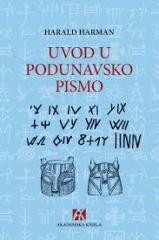
Uvod u podunavsko pismo

Uvod u podunavsko pismo

Harald Haarman

Introduction to the Danubian Script by Harald Haarmann (2010) is the first systematic introduction to the oldest writing system in Europe – the Old European or Danubian script (c. 5300–3200 BC), which emerged within the framework of the Danubian Civilizat

Akademska knjiga, 2022.
Serbian. Latin alphabet. Hardcover.
20.00
Otisci bogova: Potraga za početkom i krajem

Otisci bogova: Potraga za početkom i krajem

Graham Hancock

Hancock's evidence reveals not only the clear footprints of an unknown civilization that flourished during the last ice age, but also the terrifying truth about the scale of the catastrophe that wiped out almost all traces of it.

Stari grad, 2002.
Croatian. Latin alphabet. Hardcover.
19.2215.46 - 19.3619.28
Nofretete: Arheološka biografija

Nofretete: Arheološka biografija

Philipp Vandenberg

The book explores the life and legacy of the Egyptian Queen Nefertiti. The book provides detailed insight into archaeological discoveries related to this enigmatic figure, known for her extraordinary beauty and influence during the 14th century BC.

Stvarnost, 1975.
Croatian. Latin alphabet. Hardcover.
7.32
Armagedonske bitke: Megido i Jizreelska dolina od Brončanoga do Nuklearnoga doba

Armagedonske bitke: Megido i Jizreelska dolina od Brončanoga do Nuklearnoga doba

Eric H. Cline

The book by a world-renowned archaeologist and historian explores Megiddo (Hebrew: Har Megiddo, Greek: Armageddon) and the Jezreel Valley as the bloodiest battlefield in world history. Over 4,000 years, 34 major battles were fought in this strategic pass.

Stari grad, 2005.
Croatian. Latin alphabet. Hardcover.
15.22 - 15.34
Pompeji und Herculaneum

Pompeji und Herculaneum

Marcel Brion
Verlag M. Dumont Schauberg, 1971.
German. Latin alphabet. Hardcover with dust jacket.
14.98
Arktička pradomovina Veda

Arktička pradomovina Veda

Bal Gandahar Tilak

The book The Arctic Homeland of the Vedas (1903) by the Indian scholar Tilak proposed the hypothesis that the ancient Aryans, the authors of the Rigveda, originated in the Arctic region. Although controversial, the book remains important in the study of V

NIRO Književne novine, 1987.
Serbian. Latin alphabet. Paperback.
17.56